This entry is really my overlarge comment to this post here which was inspired my post here and is really a constellation of more questions of course than answers.
I agree that people like Kurzweil seem to be missing something when it comes to characterizing human intelligence as some conglomeration of brute computational powers. Still, at the risk of sounding more like a behaviourist than a functionalist I find myself wondering about some questions.
How do we know that another human is conscious and possesses real understanding? We do seem to take it for granted. I wonder if some people that I have met would pass a Turing test. Well, one way to gauge that would be to ask them. So if there came about some future controversy if a particular robot was indeed possessing of real intelligence then we could ask it directly. This doesn't really help us because it could be programmed to answer in ways that appear functionally to actually possess intelligence and consciousness.
In much the same way a psychopath is very good at mimicking moral and ethical behaviour even if they can't begin to understand it's meaning. But something eventually gives away the psychopath (like killing and eating the brain of a hitchhiker). But if nothing gives away the robot's virtual consciousness as being different from ours then why should we begrudge its claim. So another question arises: If they can fool everyone can they fool themselves? - Like Deckard in Bladerunner who doesn't know that he is a replicant.
In Searle's Chinese Room experiment a comprehensive collection of tables and maps describing the relationships of symbols to each other are available to Searle. With these he can produce an impression to an interlocutor that Searle actually understands Chinese while he really does not. These tables and maps are of course external and peripheral but what if they were internally accessed by Searle in some way that he came to be able to use them without knowing on the surface how he was using them. I think someone like Kurzweil could imagine some form of downloadable tables and maps that could be internalized so that the speaker could speak Chinese without actually understanding how they are able to speak Chinese. Which leads to another question: Does my friend Mr. Fung know "how" he speaks Chinese?
Deep Blue doesn't really understand chess and software doesn't know from pizza and this is because they lack something that the German Philosopher Heidegger called "Care". The human being's comportment to the world and its intelligence is informed by this "care" or "concern" ("sorge" in German). In order to allow a robot to achieve human-like understanding they need to have something at stake it seems. We could supply this only by ensuring that they have a vulnerable body, mortality, social history, encumbrances, risks etc. along with desires and fears in the service of self-transparent as well as deep hidden motivations. But by giving it all of those features (some would say weaknesses) what you are really designing here is a human being made with human parts and human histories and that's not really a robot. Perhaps developments in biotechnological computing will create biological robots that cannot be denied to possess human-like understanding on the grounds that they lack care, because they will also possess it.
While I hold onto the notion that human intelligence is something special and cannot be recreated simply with processing power I wonder if that will become moot when we begin to add cyborg peripherals that become deeply internalized and when the human body can be manipulated and altered through genetic nano-technology to the point of busting open the categories so that the limits and differentiations between robot and human become blurred. We may then have greatly more numerous categories of intelligence to contend with.
Monday, November 27, 2006


Sunday, November 26, 2006
Recent Viewings
The History Boys - A British stage play adapted to film featuring the entire original cast. A very charming, dialogue-rich treat. What Dead Poet's Society could have been if it didn't suck.
Fog of War - Documentary in which Robert McNamara candidly discusses his role in the Vietnam War in his capacity as Secretary of Defense. Clearly still very bright as an octogenarian, McNamara can even be characterized as sympathetic while calmly discussing the horrors of war.
What The Bleep Do We Know - Mysticism meets quantum mechanics. It starts out harmlessly enough but quickly degenerates into one of the most irritating movies I've seen in years.
Dawn of the Dead (2004) - I watched it because Sarah Polley (girl from my hood) was in it. It was better than I expected. Paying homage to George Romero's 1978 version and the movie that started it all, Night of the Living Dead. Another zombie movie I liked was 28 Days Later.
Shaun Of The Dead - A British send-up of the zombie genre. Stupid, childish and a hoot to watch.
Taste of Cherry - Hollywood anti-matter. Iranian director Abbas Kiarostami's mesmerizing and quiet little film about a guy driving around Tehran looking for someone to bury him. It's like watching a painting dry. Roger Ebert hated it.
Cache - French film by Michael Haneke which starts and ends with long static video sequences in which nothing happens. Another one which leaves room for much debate about just exactly what the movie is about.
Stranger Than Fiction - Not quite Charlie Kaufman and not quite Spike Jonze. A digestible cookie of a movie.
Fog of War - Documentary in which Robert McNamara candidly discusses his role in the Vietnam War in his capacity as Secretary of Defense. Clearly still very bright as an octogenarian, McNamara can even be characterized as sympathetic while calmly discussing the horrors of war.
What The Bleep Do We Know - Mysticism meets quantum mechanics. It starts out harmlessly enough but quickly degenerates into one of the most irritating movies I've seen in years.
Dawn of the Dead (2004) - I watched it because Sarah Polley (girl from my hood) was in it. It was better than I expected. Paying homage to George Romero's 1978 version and the movie that started it all, Night of the Living Dead. Another zombie movie I liked was 28 Days Later.
Shaun Of The Dead - A British send-up of the zombie genre. Stupid, childish and a hoot to watch.
Taste of Cherry - Hollywood anti-matter. Iranian director Abbas Kiarostami's mesmerizing and quiet little film about a guy driving around Tehran looking for someone to bury him. It's like watching a painting dry. Roger Ebert hated it.
Cache - French film by Michael Haneke which starts and ends with long static video sequences in which nothing happens. Another one which leaves room for much debate about just exactly what the movie is about.
Stranger Than Fiction - Not quite Charlie Kaufman and not quite Spike Jonze. A digestible cookie of a movie.
Friday, November 24, 2006
Ghost in the Machine
Despite the considerable efforts to build a machine with artificial intelligence there has been little real success. Fifty years ago Turing elaborated a test that could be performed on a machine (robot/computer/software) that would determine if they possessed human-like intelligence. Ray Kurzweil recently predicted that a computer will have the raw computing capacity of the human brain by the year 2020 and that of the entirety of collective humanity by the year 2050. There are many detractors that consider that to be overly optimistic and yet others who doubt any machine will ever achieve human-like intelligence.
In 1770 a clever showman toured Europe with a machine he had built called The Turk. This exotic looking Ottoman automaton took on all challengers and was able to beat nearly anyone at chess. It was revealed many decades later that inside the machine was hidden a compact human chess master who was covertly controlling the machine and beating his opponents with apparent ease. Instead of Intel Inside, the logo on the side of the machine should have read Human Inside.
Chess playing computers have come a long way since then. The machine Deep Blue is now the best chess player in the world having beaten Gary Kasparov a few years ago. It can compute staggeringly large numbers of possible outcomes to decide on its next move, eventually wearing its human opponent down with its sheer number-crunching capabilities. Machines are really great at doing such calculation intensive tasks. Banks, insurance companies and other large organizations were the first to use artificial intelligence to do such work in a fraction of the time required to do the job by the Bob Cratchits of the world.
Recent advances in computing power have closely followed Moore's Law and attained efficient number-crunching capabilities approaching petaFLOP speeds. So one would guess that there were nothing left that a machine wouldn't be able to compute better than a human. What about looking at a picture and determining whether anyone in that picture is eating pizza? This is an example of a task that artificial intelligence has a real hard time doing. Any child could pull it off and so could several clever gorillas and orangutans.
So what are you to do if your company needs to sort through thousands of pictures to find pictures of people eating pizza? Artificial intelligence doesn't seem to be up to the challenge so what is required is artificial artificial intelligence or human intelligence. Just like that touring renaissance chess machine the computer requires the assistance of Human Inside architecture. So Amazon is making such a service available and they have cleverly called it the Mechanical Turk. If you've got a few spare cycles you can sign up and take on such simple work and be paid for it at the rate of a few cents per task.
Human intelligence is the new artificial intelligence.
In 1770 a clever showman toured Europe with a machine he had built called The Turk. This exotic looking Ottoman automaton took on all challengers and was able to beat nearly anyone at chess. It was revealed many decades later that inside the machine was hidden a compact human chess master who was covertly controlling the machine and beating his opponents with apparent ease. Instead of Intel Inside, the logo on the side of the machine should have read Human Inside.
Chess playing computers have come a long way since then. The machine Deep Blue is now the best chess player in the world having beaten Gary Kasparov a few years ago. It can compute staggeringly large numbers of possible outcomes to decide on its next move, eventually wearing its human opponent down with its sheer number-crunching capabilities. Machines are really great at doing such calculation intensive tasks. Banks, insurance companies and other large organizations were the first to use artificial intelligence to do such work in a fraction of the time required to do the job by the Bob Cratchits of the world.
Recent advances in computing power have closely followed Moore's Law and attained efficient number-crunching capabilities approaching petaFLOP speeds. So one would guess that there were nothing left that a machine wouldn't be able to compute better than a human. What about looking at a picture and determining whether anyone in that picture is eating pizza? This is an example of a task that artificial intelligence has a real hard time doing. Any child could pull it off and so could several clever gorillas and orangutans.
So what are you to do if your company needs to sort through thousands of pictures to find pictures of people eating pizza? Artificial intelligence doesn't seem to be up to the challenge so what is required is artificial artificial intelligence or human intelligence. Just like that touring renaissance chess machine the computer requires the assistance of Human Inside architecture. So Amazon is making such a service available and they have cleverly called it the Mechanical Turk. If you've got a few spare cycles you can sign up and take on such simple work and be paid for it at the rate of a few cents per task.
Human intelligence is the new artificial intelligence.
Thursday, November 23, 2006
Would You Like Fries With That Salt?
Why do they have salt packets in fast-food hamburger restaurants?
How addicted would you have to be to add salt to something that is already covered with salt and accompanied by your choice of ketchup, pickles, mustard, relish, mayo etc?
How addicted would you have to be to add salt to something that is already covered with salt and accompanied by your choice of ketchup, pickles, mustard, relish, mayo etc?
Monday, November 20, 2006
Rule of Law
There are cases that can test our respect for the rule of law, but these offer the best opportunity for us also to strengthen it.
Four out of five vigilantes were convicted in New Brunswick this week for setting ablaze the house of a suspected drug dealer who it was said was making life in the town very unpleasant.
Saddam Hussein's trial is described as being "flawed and unsound" by Human Rights Watch as they call for it to be overturned and retried.
In the first case the common public reaction might be to lionize the defendants and to advocate leniency for them. In the second case the the common reaction would be to vilify the defendant and conveniently overlook the possibility that an unfair trial may have taken place.
At odds is the personal realm versus the abstract realm. Crimes are real and personal whereas laws are abstract and impersonal. Original and primitive justice is much more of the immediate, real and personal variety. If one feels that they have been impeded or wronged they lash out and penalize the perpetrator of the perceived crime. Caveman A's food is taken from him by Caveman B so the aggrieved clubs the thief over the head (assuming the power structure doesn't favour Caveman B so that Caveman A will suffer even bigger lumps). What is the great innovation of the Rule of Law is that retaliatory action and punishment is taken out of the personal and immediate realm and put in the hands of impersonal and sober Justice who is said to be blind.
What is liberating and democratic about the experiment is that all members of a group agree to be bound within it. Just because Caveman B is the son of the Shaman doesn't exclude him from the the consequences of his actions within the prescribed legal framework. The weakest in the group is protected from being abused by the most powerful. The side-effect of this is that even the most villainous is also promised a guarantee of due process.
The vigilante, even if he is supported by the masses to have acted correctly must be subject to the law. Sometimes masses are moved by cynically spread rumours and can be manipulated to act on unfounded suspicions. "I hear Martha is a witch. I saw her riding a broom last week. Something should be done about that woman." I'm sure those who lynched young black men for looking at white women the wrong way were convinced they were right. But we clearly can't trust vindictive personal rage to be the arbiter of right and wrong.
The evil dictator, even if he would probably have his eyes personally plucked out by the families of those that he killed, must be given a fair trial. It can only be this way if we want to continue to enjoy the liberating and democratizing power of the rule of law. Any abuse of it weakens it strength and could fail us when we need it most. For the law to continue to work for us, we must continue to work for it.
Some might laugh or scoff at the insistence that Saddam should receive a fair trial. But this is a great opportunity to show our western respect for the law. If he is clearly guilty, then he will get what is coming to him. We don't need to subvert our principles to hasten the process. So we should give him a fair trial but likewise a fair trial should also be afforded to those Western leaders who chose to flout the prevailing international laws to engage in vigilante military action.
Just because Caveman B is the head of a large and powerful nation doesn't give him the right to circumvent the law. Especially since the very founding of that powerful nation is based on these principles as they have been so admirably put forth by the framers of a really fine work of constitution. The job of Caveman B is to protect and uphold that constitution. Even he is culpable and open to prosecution if he decides to contravene it.
This reminds me of an infamous event in an American Presidential debate. Michael Dukakis who is against capital punishment was asked what he would say if his wife Kitty were raped and murdered. Would he not then want capital punishment to be meted out to the perpetrator? His response was: "No, I don't, and I think you know that I've opposed the death penalty during all of my life". He gave the right and consistent theoretical answer but it cost him dearly in the polls. What he should have said was that he probably would in that instance want to tear into the killer with his bare hands. Then adding that even if he felt he was right in the personal realm of immediate rage and retribution, he would have been wrong in the abstract realm of the law. That abstract and impersonal quality of the rule of law is worth upholding and even the most powerful should be held accountable to it.
-
Four out of five vigilantes were convicted in New Brunswick this week for setting ablaze the house of a suspected drug dealer who it was said was making life in the town very unpleasant.
Saddam Hussein's trial is described as being "flawed and unsound" by Human Rights Watch as they call for it to be overturned and retried.
In the first case the common public reaction might be to lionize the defendants and to advocate leniency for them. In the second case the the common reaction would be to vilify the defendant and conveniently overlook the possibility that an unfair trial may have taken place.
At odds is the personal realm versus the abstract realm. Crimes are real and personal whereas laws are abstract and impersonal. Original and primitive justice is much more of the immediate, real and personal variety. If one feels that they have been impeded or wronged they lash out and penalize the perpetrator of the perceived crime. Caveman A's food is taken from him by Caveman B so the aggrieved clubs the thief over the head (assuming the power structure doesn't favour Caveman B so that Caveman A will suffer even bigger lumps). What is the great innovation of the Rule of Law is that retaliatory action and punishment is taken out of the personal and immediate realm and put in the hands of impersonal and sober Justice who is said to be blind.
What is liberating and democratic about the experiment is that all members of a group agree to be bound within it. Just because Caveman B is the son of the Shaman doesn't exclude him from the the consequences of his actions within the prescribed legal framework. The weakest in the group is protected from being abused by the most powerful. The side-effect of this is that even the most villainous is also promised a guarantee of due process.
The vigilante, even if he is supported by the masses to have acted correctly must be subject to the law. Sometimes masses are moved by cynically spread rumours and can be manipulated to act on unfounded suspicions. "I hear Martha is a witch. I saw her riding a broom last week. Something should be done about that woman." I'm sure those who lynched young black men for looking at white women the wrong way were convinced they were right. But we clearly can't trust vindictive personal rage to be the arbiter of right and wrong.
The evil dictator, even if he would probably have his eyes personally plucked out by the families of those that he killed, must be given a fair trial. It can only be this way if we want to continue to enjoy the liberating and democratizing power of the rule of law. Any abuse of it weakens it strength and could fail us when we need it most. For the law to continue to work for us, we must continue to work for it.
Some might laugh or scoff at the insistence that Saddam should receive a fair trial. But this is a great opportunity to show our western respect for the law. If he is clearly guilty, then he will get what is coming to him. We don't need to subvert our principles to hasten the process. So we should give him a fair trial but likewise a fair trial should also be afforded to those Western leaders who chose to flout the prevailing international laws to engage in vigilante military action.
Just because Caveman B is the head of a large and powerful nation doesn't give him the right to circumvent the law. Especially since the very founding of that powerful nation is based on these principles as they have been so admirably put forth by the framers of a really fine work of constitution. The job of Caveman B is to protect and uphold that constitution. Even he is culpable and open to prosecution if he decides to contravene it.
This reminds me of an infamous event in an American Presidential debate. Michael Dukakis who is against capital punishment was asked what he would say if his wife Kitty were raped and murdered. Would he not then want capital punishment to be meted out to the perpetrator? His response was: "No, I don't, and I think you know that I've opposed the death penalty during all of my life". He gave the right and consistent theoretical answer but it cost him dearly in the polls. What he should have said was that he probably would in that instance want to tear into the killer with his bare hands. Then adding that even if he felt he was right in the personal realm of immediate rage and retribution, he would have been wrong in the abstract realm of the law. That abstract and impersonal quality of the rule of law is worth upholding and even the most powerful should be held accountable to it.
-
Saturday, November 18, 2006
ENTP
About 15 years ago while an undergrad I took a personality test with a group of people chosen to work together. The MBTI test resulted in each one of us being told we were one of sixteen different personality types represented by four letters. I just took a shorter version of the test and it seems I haven't really changed.
Characteristics
At their best people with ENTP preferences constantly scan the environment for opportunities and possibilities. They see patterns and connections not obvious to others and at times seem to be able to see into the future. They are adept at generating conceptual possibilities and then analysing them strategically. ENTPs are good at understanding how systems work and are enterprising and resourceful in manoeuvring within them to achieve their ends.
- ENTPs are enthusiastic innovators. Their world is full of possibilites, interesting concepts and exciting challenges. They are stimulated by difficulties, quickly devising creative responses and plunging into activity, trusting their ability to improvise. They use their Intuition primarily externally and enjoy excercising ingenuity in the world. ENTPs are are likely to be:
- Creative, imaginative and clever
- Theoretical, conceptual and curious
ENTPs use their Thinking primarily internally to analyse situations and their own indeas and to plan. They admire competence, intelligence, precision and efficiency. ENTPs are usually:
- Analytical, logical, rational and objective
- Assertive and questioning
ENTPs are enterprising, resourceful, active and energetic. They respond to challenging problems by creating complex and global solutions. They are usually adept at "reading" other people, seeing how to motivate them and assuming leadership. They can do almost anything that captures their interest.
See Forer Effect.Friday, November 17, 2006
Nominally Connected
Barot is a terrorist.
Borat is a terror.
Sacha Baron-Cohen is Borat.
Simon Baron-Cohen is his cousin.
Borat is a terror.
Sacha Baron-Cohen is Borat.
Simon Baron-Cohen is his cousin.
Wednesday, November 15, 2006
Language is the House of Being
I submitted a comment today to one of the blogs that I read regularly. It is written by a young linguist and so the subject matter was words, specifically how their meanings can change in popular usage, sometimes to the extent of coming to mean the exact opposite. As I was writing the comment, it happened to me again. Sometimes when I pay too close attention to a word I start to get this strange feeling that the word begins to slip away from me, lose it's meaning and become something very strange and incomprehensible. A short word like "and" if stared at for a while starts to look odd and I begin to wonder if I'm even spelling it correctly. The more common and everyday the word, the more likely this bizarre confusion can result for me. I thought about going into Linguistics but was freaked out by the possibility that I would one day become a blathering idiot unable to understand simple speech.
You might know what I mean if you have ever started thinking about an everyday activity while you're engaged in that very activity. If you really pay attention to the way you walk as you are walking you can become very confused and possibly trip. This, I think explains the awkward person's gait. He or she may simply be too conscious of the way in which they are being perceived. The really cool person is someone who seems not to care what you think when they walk past.
For heaven's sake don't even try thinking about chewing while you eat, you are likely to bite your tongue or the inside of your cheek. Likewise, a really smooth series of hammering strokes can be interrupted by thinking about hammering thereby causing you to bang your thumb. I think words are like that, in that they are the most common everyday tool that we use and speaking and reading are the most common of everyday activities. If you stop and scrutinize the tool or activity while engaged with that tool or activity then estrangement results from that tool or activity. The more intimate and everyday that tool or activity the more freaked-out you could be if you ever stop to look at it really closely. It is our nature to take such things for granted. Look very closely at a fork or a doorknob and you might get that feeling I'm describing.
Martin Heidegger touches on this in Being and Time. The meaning of being is derived through the series of interconnected relations of other beings-in-the-world. The human being which he called Da-sein relies on a dependency between Dasein and the world. You can be in a state of un-reflecting everydayness until you stop and make a separation between you and other beings. The hammer, the fork, the doorknob, you and the word function within a field of experience that constitutes existence until you choose to atomize or make discreet this existence into parts that are set off against each other as distinct beings.
Words and World.
You might know what I mean if you have ever started thinking about an everyday activity while you're engaged in that very activity. If you really pay attention to the way you walk as you are walking you can become very confused and possibly trip. This, I think explains the awkward person's gait. He or she may simply be too conscious of the way in which they are being perceived. The really cool person is someone who seems not to care what you think when they walk past.
For heaven's sake don't even try thinking about chewing while you eat, you are likely to bite your tongue or the inside of your cheek. Likewise, a really smooth series of hammering strokes can be interrupted by thinking about hammering thereby causing you to bang your thumb. I think words are like that, in that they are the most common everyday tool that we use and speaking and reading are the most common of everyday activities. If you stop and scrutinize the tool or activity while engaged with that tool or activity then estrangement results from that tool or activity. The more intimate and everyday that tool or activity the more freaked-out you could be if you ever stop to look at it really closely. It is our nature to take such things for granted. Look very closely at a fork or a doorknob and you might get that feeling I'm describing.
Martin Heidegger touches on this in Being and Time. The meaning of being is derived through the series of interconnected relations of other beings-in-the-world. The human being which he called Da-sein relies on a dependency between Dasein and the world. You can be in a state of un-reflecting everydayness until you stop and make a separation between you and other beings. The hammer, the fork, the doorknob, you and the word function within a field of experience that constitutes existence until you choose to atomize or make discreet this existence into parts that are set off against each other as distinct beings.
Words and World.
Sunday, November 12, 2006
Apropos
I recently added Google text ads on this site more out of curiosity than greed. The ads are not placed randomly. Software analyzes the content of the page and chooses appropriate ads that should in theory be on the top of mind for the readers. It has been fun to see which ads appear on this site.
A recent post of mine was titled Football Coaches are Running the World. Soon after, ads started to appear for sport psychology and coaching manuals. A little while ago I had written about matters scientific and immediately started to see ads for laboratory and optical equipment. A friend of mine told me that she had clicked on a couple of those ads. For days and days after it seemed that there were nothing but optical ads. It seems that clicked ads reflect a successful placement so more ads like it are immediately funneled in.
I did a search for a book written by an old professor of mine called Hegel's Ladder. I found a book review page and was very much amused by the ads on that page. Six out of the eight ads were for ladder hardware products. Software just ain't that smart yet.
A recent post of mine was titled Football Coaches are Running the World. Soon after, ads started to appear for sport psychology and coaching manuals. A little while ago I had written about matters scientific and immediately started to see ads for laboratory and optical equipment. A friend of mine told me that she had clicked on a couple of those ads. For days and days after it seemed that there were nothing but optical ads. It seems that clicked ads reflect a successful placement so more ads like it are immediately funneled in.
I did a search for a book written by an old professor of mine called Hegel's Ladder. I found a book review page and was very much amused by the ads on that page. Six out of the eight ads were for ladder hardware products. Software just ain't that smart yet.
Saturday, November 11, 2006
Office Space Recut
Office Space
Recut as a thriller. LOL
I actually did laugh out loud.
You can find other versions here:
Crime Thriller
Drama
Recut as a thriller. LOL
I actually did laugh out loud.
You can find other versions here:
Crime Thriller
Drama
Atheism Rebranded
Lately I have begun to wonder if the apparent rise in religiosity has been but a chimera. At first one begins to speculate possible reasons for it's growth. Perhaps it is a response to this rapidly changing world in which people feel more insecure and as a result find solace and meaning in that which gives them stability and comfort. Maybe it's a conspiracy of the powers that be to mollify the masses making them easier to sway through their media maelstrom.
I have mostly given up on the idea of Progress (with a capitol P). I identify less with Hegel and more with Nietzsche on that matter so it shouldn't be surprising to find that we as a species can easily revert to supernaturalism. There is no guarantee that we will continue to develop our understanding in a progressive manner. The forces of will, politics, domination and exploitation may find their paths smoothed by a population that believes and obstructed by a population of unbelievers.
Still, I can't help but come back to that notion of progress. One could consider that the recent and fervent rise in fundamentalism is really just a last gasp of that world-view as it inevitably comes to its conclusion. There is a dialectical framework that is attributed to Hegel (you could say it should be to Kant or Fichte). It is the notion of the triad wherein an idea or thesis brings about its opposition or antithesis and finally leads to a truer understanding or synthesis.
I'm not sure about the synthesis part but this could be an instructive way to view the forces at work here. Atheism is the thesis that has brought about a strong reaction of its antithesis manifested in fundamentalism. These are processes that could take decades or centuries to unfold. One could say that the Enlightenment was really the thesis of naturalism and that it has been waging war with it's antithesis of supernaturalism ever since. I would say that the paradigm is more like a pendulum than a triad. It swings to one extreme, then the other, then back again. We have been lately at the supernatural end of that sway but it is heartening to see signs that we may have already reached that pinnacle and are about to make our way back the other way.
One sees it in the books, documentaries, and even blogs that have taken up the cause. In a clever marketing move, some of the people driving this cause have taken a play from another group ostracized by the religious establishment; the gay community. That community took a positive descriptive and used it to refer to themselves. The word gay is upbeat and doesn't stand in opposition to anything except maybe the word unhappy. The word atheism on the other hand is a negative descriptor and stands strictly in opposition to something, namely theism. So atheism or naturalism has been rebranded as Bright.
But a pendulum eventually comes to rest at a balance. It will have to arrive at a balance I believe and not at one side or the other. There have been attempts to carve out this space lately. People like Deepak Chopra and the makers of What The Bleep Do We Know have tried to reconcile science and religiosity but judging by their efforts we have a long, long way to go. The motivation to understand is at the heart of both sides of the pendulum's sway and that is what should not be overlooked.
I have mostly given up on the idea of Progress (with a capitol P). I identify less with Hegel and more with Nietzsche on that matter so it shouldn't be surprising to find that we as a species can easily revert to supernaturalism. There is no guarantee that we will continue to develop our understanding in a progressive manner. The forces of will, politics, domination and exploitation may find their paths smoothed by a population that believes and obstructed by a population of unbelievers.
Still, I can't help but come back to that notion of progress. One could consider that the recent and fervent rise in fundamentalism is really just a last gasp of that world-view as it inevitably comes to its conclusion. There is a dialectical framework that is attributed to Hegel (you could say it should be to Kant or Fichte). It is the notion of the triad wherein an idea or thesis brings about its opposition or antithesis and finally leads to a truer understanding or synthesis.
I'm not sure about the synthesis part but this could be an instructive way to view the forces at work here. Atheism is the thesis that has brought about a strong reaction of its antithesis manifested in fundamentalism. These are processes that could take decades or centuries to unfold. One could say that the Enlightenment was really the thesis of naturalism and that it has been waging war with it's antithesis of supernaturalism ever since. I would say that the paradigm is more like a pendulum than a triad. It swings to one extreme, then the other, then back again. We have been lately at the supernatural end of that sway but it is heartening to see signs that we may have already reached that pinnacle and are about to make our way back the other way.
One sees it in the books, documentaries, and even blogs that have taken up the cause. In a clever marketing move, some of the people driving this cause have taken a play from another group ostracized by the religious establishment; the gay community. That community took a positive descriptive and used it to refer to themselves. The word gay is upbeat and doesn't stand in opposition to anything except maybe the word unhappy. The word atheism on the other hand is a negative descriptor and stands strictly in opposition to something, namely theism. So atheism or naturalism has been rebranded as Bright.
But a pendulum eventually comes to rest at a balance. It will have to arrive at a balance I believe and not at one side or the other. There have been attempts to carve out this space lately. People like Deepak Chopra and the makers of What The Bleep Do We Know have tried to reconcile science and religiosity but judging by their efforts we have a long, long way to go. The motivation to understand is at the heart of both sides of the pendulum's sway and that is what should not be overlooked.
Atheism
In grade 7 my friend David and I had a clandestine conversation about religion in the school library one afternoon. After some diplomatically chosen lines of discussion I realized that I was not alone in thinking that all this talk about God and heaven seemed quite silly. A huge weight was lifted off my chest as I was finally able to talk openly with someone who shared my skepticism. I guess coming out must feel a little like that. I went home thinking that I had just made a new best friend with whom I could be open and honest.
The next time we were in school together David seemed to avoid me all day long. He seemed estranged and nervous when I finally caught up with him. Standing across from me, the first words out of his mouth were something to the effect of "you're wrong you know, Jesus Christ died for our sins". Awestruck, I stood in silence and listened, feeling like that woman in the last scene of that new movie I had just viewed, when she calls out to Donald Sutherland's character only to find that her last friend and only lifeline has become "one of them".
Disappointed and crushed, I politely mumbled something and walked away. We were never really friends after that. By the time I had made it to high school I threw off any pretense of diplomacy and started a campaign to promote Atheism to anyone who would listen. Being fully out, I wasn't shy about it and my zealot's drive to convert carried through into University. My naive faith in progress lead me to believe that people would eventually see the truth if it was persuasively laid bare and that our societies at large would eventually shrug off these ancient superstitions and become more and more atheistic.
I've had a hard time reconciling this expectation with what has been seemingly happening over the last decade or so. Judging by the triumphs of the Religious Right in America, the rise of Islamic Fundamentalism, and the ever deepening quagmire of the religious dispute between the Jews in Israel and the Arabs around them, we don't seem to be progressing at all or one has to go further and throw out the notion of progress altogether.
I've been largely in exile from this conversation for more than a decade, wandering the desert, waiting for a sign.
The next time we were in school together David seemed to avoid me all day long. He seemed estranged and nervous when I finally caught up with him. Standing across from me, the first words out of his mouth were something to the effect of "you're wrong you know, Jesus Christ died for our sins". Awestruck, I stood in silence and listened, feeling like that woman in the last scene of that new movie I had just viewed, when she calls out to Donald Sutherland's character only to find that her last friend and only lifeline has become "one of them".
Disappointed and crushed, I politely mumbled something and walked away. We were never really friends after that. By the time I had made it to high school I threw off any pretense of diplomacy and started a campaign to promote Atheism to anyone who would listen. Being fully out, I wasn't shy about it and my zealot's drive to convert carried through into University. My naive faith in progress lead me to believe that people would eventually see the truth if it was persuasively laid bare and that our societies at large would eventually shrug off these ancient superstitions and become more and more atheistic.
I've had a hard time reconciling this expectation with what has been seemingly happening over the last decade or so. Judging by the triumphs of the Religious Right in America, the rise of Islamic Fundamentalism, and the ever deepening quagmire of the religious dispute between the Jews in Israel and the Arabs around them, we don't seem to be progressing at all or one has to go further and throw out the notion of progress altogether.
I've been largely in exile from this conversation for more than a decade, wandering the desert, waiting for a sign.
Friday, November 10, 2006
Conversations I had at Starbucks Tonight
The B'nai Mitzvah, Confirmation and Sünnet:
Putting aside the religious justifications, each of these have traditionally been performed as the young child is about to enter adulthood. Maybe in the ancient past, but do we really consider the entering of puberty to be the onset of adulthood? It may be argued that adulthood is increasingly delayed until reaching well into the 20's or 30's if it is ever reached at all.
Teachers that I know tell me that girls are almost always the brightest students in their classrooms, even excelling in the traditionally male domain of mathematics. While the boys have been spending their days playing video games and raving about Jackass The Movie, the girls have left them behind and are beginning to realize that they don't need men to complete them. This spells trouble for us guys. If we're not careful, these developments along with the current advancements in reproductive technologies may eventually make us obsolete.
I am more likely to dance in front of complete strangers than friends or family. I don't know exactly why.
Twins within the womb compete for resources. What determines success? Location, Location, Location.
Fibonacci Numbers are still amazing.
Putting aside the religious justifications, each of these have traditionally been performed as the young child is about to enter adulthood. Maybe in the ancient past, but do we really consider the entering of puberty to be the onset of adulthood? It may be argued that adulthood is increasingly delayed until reaching well into the 20's or 30's if it is ever reached at all.
Teachers that I know tell me that girls are almost always the brightest students in their classrooms, even excelling in the traditionally male domain of mathematics. While the boys have been spending their days playing video games and raving about Jackass The Movie, the girls have left them behind and are beginning to realize that they don't need men to complete them. This spells trouble for us guys. If we're not careful, these developments along with the current advancements in reproductive technologies may eventually make us obsolete.
I am more likely to dance in front of complete strangers than friends or family. I don't know exactly why.
Twins within the womb compete for resources. What determines success? Location, Location, Location.
Fibonacci Numbers are still amazing.
Thursday, November 09, 2006
GDP vs GPI
Gross Domestic Product is the total output or total monetized value of all that a nation produces. The success of nations, like corporations, are often judged primarily by the growth of that total output. The value of a company is so linked to the growth of its output that the price of a stock in a company reflects more the rate of growth expected in the future than its actual present output. We are addicted to growth at the expense of overlooking the true costs of growth.
Someone must have tutored Nicolae Ceauşescu about the economics of growth. He correctly reasoned that people were the most valuable resource of an economy but incorrectly settled on increasing the quantity of human resources instead of its quality. The 1966 Decree found an easy solution to a wicked problem. He simply instituted bans on contraception and abortion and severely limited the acceptable grounds for divorce. The resulting disaster socially, culturally and economically cannot be overstated.
Adam Smith, followed also by Marx and most economic theorists after them take it for granted that growth is the measure by which success is measured. But when you consider the costs of the effects of growth with an eye on resource depletion and environmental harm, not to mention social and cultural effects then things aren't so easy any more. The blindness to such costs of growth are easy to ignore because their payment often will not come due until after the present government is out of office so that the next government and generation will have inherited the problem. Or not until the current CEO has safely retired with the bonuses earned through bolstered stock prices brought about by growth.
The Genuine Progress Indicator may be a better gauge of real desired economic achievement because some cases of expansion are really examples of uneconomic growth. Under GDP calculations a massive oil spill off the coast of California would be positive for GDP growth since it would result in massive expenditures for services and goods to clean the shores and replace the tanker and the oil. GPI seems to lack the demonstrable calculability of GDP but it's a start towards taking into account the the real complexities of corporate and public policy. Governments and companies would be better to concern themselves with how to design platforms for genuine progress not just blind growth.
Someone must have tutored Nicolae Ceauşescu about the economics of growth. He correctly reasoned that people were the most valuable resource of an economy but incorrectly settled on increasing the quantity of human resources instead of its quality. The 1966 Decree found an easy solution to a wicked problem. He simply instituted bans on contraception and abortion and severely limited the acceptable grounds for divorce. The resulting disaster socially, culturally and economically cannot be overstated.
By the late 1960s, the population began to swell, accompanied by rising poverty and increased homelessness (street children) in the urban areas. In turn, a new problem was created by uncontrollable child abandonment, which swelled the orphanage population and facilitated a rampant AIDS epidemic in the late 1980s. (Wikipedia)The presumption of scientific certainty being overlaid on amorphous processes has largely been the goal of economic theory and praxis. Such presumptions almost always result in disastrous unintended results. The bigger problem is often the problem that you can't see, not the one you can see.
Adam Smith, followed also by Marx and most economic theorists after them take it for granted that growth is the measure by which success is measured. But when you consider the costs of the effects of growth with an eye on resource depletion and environmental harm, not to mention social and cultural effects then things aren't so easy any more. The blindness to such costs of growth are easy to ignore because their payment often will not come due until after the present government is out of office so that the next government and generation will have inherited the problem. Or not until the current CEO has safely retired with the bonuses earned through bolstered stock prices brought about by growth.
The Genuine Progress Indicator may be a better gauge of real desired economic achievement because some cases of expansion are really examples of uneconomic growth. Under GDP calculations a massive oil spill off the coast of California would be positive for GDP growth since it would result in massive expenditures for services and goods to clean the shores and replace the tanker and the oil. GPI seems to lack the demonstrable calculability of GDP but it's a start towards taking into account the the real complexities of corporate and public policy. Governments and companies would be better to concern themselves with how to design platforms for genuine progress not just blind growth.
Monday, November 06, 2006
Depletist
Depletist
1. An individual or group demonstrating apparent negligent or reckless disregard for the environmental consequences of their actions.
2. An individual or group that exhausts non-renewable resources and rejects positive environmental strategies.
My friend Robin organized a conference at the Ontario College of Art and Design recently. A student at the College presented a project that his 4th year class has just initiated. The project's aim is environmental and it involves the unleashing of a meme onto the world and tracking its propagation. The meme is the word/thought/concept "Depletist".
It's very encouraging to see such a project undertaken by these students. I'm doing my part here to support them. Over the past 2 weeks the word has already begun to make its rounds. It was used at a presentation made at the United Nations last week and has its own entry in Wikipedia.
Pass it on.
1. An individual or group demonstrating apparent negligent or reckless disregard for the environmental consequences of their actions.
2. An individual or group that exhausts non-renewable resources and rejects positive environmental strategies.
My friend Robin organized a conference at the Ontario College of Art and Design recently. A student at the College presented a project that his 4th year class has just initiated. The project's aim is environmental and it involves the unleashing of a meme onto the world and tracking its propagation. The meme is the word/thought/concept "Depletist".
It's very encouraging to see such a project undertaken by these students. I'm doing my part here to support them. Over the past 2 weeks the word has already begun to make its rounds. It was used at a presentation made at the United Nations last week and has its own entry in Wikipedia.
Pass it on.
Friday, November 03, 2006
Positive Feedback Loop
I attended a fitness model contest to support a friend who was entered. I always thought they should be renamed BDD Expos. I am generally quite skeptical of such competitions and have always considered them another example of North American excess. There is of course nothing wrong with pursuing a physically active lifestyle and watching what you eat to maintain good health. I simply wonder if even healthy activities become unhealthy when brought to extremes.
The world of the fitness model competition could be considered a positive feedback loop ecosystem. I find this subculture to be very similar to those of the cat fancier and the hot rod enthusiast. Over time a common set of aesthetic priorities are established within the group that push the creations further and further into various design directions. To win the favour of their peers and the contest judges the participant must continually push the envelope to create something that becomes increasingly removed from the aesthetic understanding of the outside world.
The cats become increasingly weirder to the point of being considered "ugly" and grotesque by the average person while their "beauty" is appreciated greatly by the initiates. Likewise, the "pimped-up" car can be startlingly bizarre and outrageous to my mother but "totally awesome" to the teenager next door. Any closed group of initiates seem to bring about this process of aesthetic evolution. We see it also within music fan cultures, whether it's speedmetal, jazz, or experimental electronic music. Within any internally competitive aesthetic group the innovation required to stay ahead is positively encouraged by the success of such innovation and this leads to further alienation of the outside observer.
So I found myself within a crowd of cheering observers and competitors positively feeding the girls on stage. It was eerily puzzling to realize that despite having in front of me a stage full of nearly nude fit young women it was hard to find any of them appealing. The natural response to physical beauty must have something to do with our intuitive assessment of health and the outside observer correctly assesses that something is amiss here. I believe we sense that this extreme stage of physical development is simply not healthy and as a result do not find it attractive. The initiate and the judges however gauge their opinions not on so-called natural physical responses but from abstract theoretical guidelines. So my friend did quite well in the competition and although none of us told her, almost everyone who knows her considers her to be a naturally beautiful girl who chooses to make herself unattractive in order to compete.
The world of the fitness model competition could be considered a positive feedback loop ecosystem. I find this subculture to be very similar to those of the cat fancier and the hot rod enthusiast. Over time a common set of aesthetic priorities are established within the group that push the creations further and further into various design directions. To win the favour of their peers and the contest judges the participant must continually push the envelope to create something that becomes increasingly removed from the aesthetic understanding of the outside world.
The cats become increasingly weirder to the point of being considered "ugly" and grotesque by the average person while their "beauty" is appreciated greatly by the initiates. Likewise, the "pimped-up" car can be startlingly bizarre and outrageous to my mother but "totally awesome" to the teenager next door. Any closed group of initiates seem to bring about this process of aesthetic evolution. We see it also within music fan cultures, whether it's speedmetal, jazz, or experimental electronic music. Within any internally competitive aesthetic group the innovation required to stay ahead is positively encouraged by the success of such innovation and this leads to further alienation of the outside observer.
So I found myself within a crowd of cheering observers and competitors positively feeding the girls on stage. It was eerily puzzling to realize that despite having in front of me a stage full of nearly nude fit young women it was hard to find any of them appealing. The natural response to physical beauty must have something to do with our intuitive assessment of health and the outside observer correctly assesses that something is amiss here. I believe we sense that this extreme stage of physical development is simply not healthy and as a result do not find it attractive. The initiate and the judges however gauge their opinions not on so-called natural physical responses but from abstract theoretical guidelines. So my friend did quite well in the competition and although none of us told her, almost everyone who knows her considers her to be a naturally beautiful girl who chooses to make herself unattractive in order to compete.
Wednesday, November 01, 2006
Bigger is Best
When you're a 12 year old boy and discover that you may have more than a passing interest in girls' breasts you take upon the childish conclusion that if some is good then more is better and huge is best. Of course this rather linear aesthetic is abandoned when one discovers that the concepts of balance and proportion might have more to do with it than size. Still, at that immature stage of development it is considered to be a axiom that any good thing must be even better in larger quantity and scale.
What is alarming is that many people never seem to get past this stage of aesthetic judgment. Marketers know this. That's why they can advertise such things as "super extra strength headache medication, the strongest most lobotomizing pain-killer you can get without a prescription". The approach in this case is to beat your headache into submission and to kill your headache, dead. The insight that is being missed is that you probably have that headache because your body has been put off-balance for some reason. Your goal should therefore be to put it back into balance - not to swing it madly into the other direction.
This pendulum approach is precisely what drug addicts are known to do. It seems that there has been an wholesale abandonment of the concept of balance as it applies to almost every facet of our lives. The effects of its absence are manifested in the tragic overreactions of modern politics. Vigilance against terrorism is good, therefore pathological obsession with it is better and therefore focusing on it to the exclusion of countless other public policy initiatives is best of all, even if spending on the environment would probably save millions of more lives than stepping up the surveillance of the citizenry.
So we continue popping pills, swilling caffeine injected sugar waters and driving our grotesquely over-sized SUV tanks as our governments use our massive military arsenal to swat at mosquitoes in far away lands.
What is alarming is that many people never seem to get past this stage of aesthetic judgment. Marketers know this. That's why they can advertise such things as "super extra strength headache medication, the strongest most lobotomizing pain-killer you can get without a prescription". The approach in this case is to beat your headache into submission and to kill your headache, dead. The insight that is being missed is that you probably have that headache because your body has been put off-balance for some reason. Your goal should therefore be to put it back into balance - not to swing it madly into the other direction.
This pendulum approach is precisely what drug addicts are known to do. It seems that there has been an wholesale abandonment of the concept of balance as it applies to almost every facet of our lives. The effects of its absence are manifested in the tragic overreactions of modern politics. Vigilance against terrorism is good, therefore pathological obsession with it is better and therefore focusing on it to the exclusion of countless other public policy initiatives is best of all, even if spending on the environment would probably save millions of more lives than stepping up the surveillance of the citizenry.
So we continue popping pills, swilling caffeine injected sugar waters and driving our grotesquely over-sized SUV tanks as our governments use our massive military arsenal to swat at mosquitoes in far away lands.
Tuesday, October 31, 2006
Football Coaches Are Running The World!
Perhaps typical for someone who would later become a philosopher, during high school I was on the debating team, student council and Reach For The Top. Perhaps atypical for such a young boy, I also played on nearly every school sport team. The teams were mostly comprised of the same jocks with only slight variance. For some reason football was considered the pinnacle of sport and the best athletes strived to make that team. The soccer team had more immigrant kids, the swimming and water polo team had more rich kids with swimming pools, the cross country team had more of the skinny kids that couldn't make the football team.
What differed from team to team were the coaches that volunteered to train and manage us. The coaches were ultimately responsible for the general environment that they created for us. The soccer coach was usually the guy with the British accent, most often Scottish and adept at yelling at us in colourful tones - "uuse yar left fuut lad". The basketball coach was always experimenting with sport psychology asking us to "visualize making that shot". Except for maybe each of them taking their respective sports a little more seriously than the players, the majority of our coaches generally let us have fun while encouraging sportsmanship.
The environment created by the football coaches was of an entirely different character. What they gave us were easily the most corrosive and counterproductive life lessons that adults can pass onto their wards. The lesson was always to win at any cost, regardless of what was right or wrong. Sportsmanship was for pussies and blatant cheating was even encouraged. They tore us down into scrap during training and fired us back into metal for the games. My coaches were less like Knute Rockne and more like Gunnery Sergeant Hartman. They were failed men trying to live their overblown macho fantasies vicariously through us.
The metaphor was overwhelmingly militaristic. Hardness and leadership were emphasized over imagination and insight. Valued were quick decisions made with determined strength, whether they turned out to be right or wrong. I later realized that these people must also have been running the MBA schools since the corporate business milieu in North America has largely been a reunion of football jocks revelling in how they told the competition to "bring-it-on" and then "kicked ass and asked questions later".
When I try to understand what goes on in the minds of Bush's inner circle I sometimes find it useful to imagine the macho football culture within which I participated as a young boy. Then it all starts to make sense. Those guys are kicking ass even if they are forgetting to ask any questions at all. The football coaches of the world are now in charge!
What differed from team to team were the coaches that volunteered to train and manage us. The coaches were ultimately responsible for the general environment that they created for us. The soccer coach was usually the guy with the British accent, most often Scottish and adept at yelling at us in colourful tones - "uuse yar left fuut lad". The basketball coach was always experimenting with sport psychology asking us to "visualize making that shot". Except for maybe each of them taking their respective sports a little more seriously than the players, the majority of our coaches generally let us have fun while encouraging sportsmanship.
The environment created by the football coaches was of an entirely different character. What they gave us were easily the most corrosive and counterproductive life lessons that adults can pass onto their wards. The lesson was always to win at any cost, regardless of what was right or wrong. Sportsmanship was for pussies and blatant cheating was even encouraged. They tore us down into scrap during training and fired us back into metal for the games. My coaches were less like Knute Rockne and more like Gunnery Sergeant Hartman. They were failed men trying to live their overblown macho fantasies vicariously through us.
The metaphor was overwhelmingly militaristic. Hardness and leadership were emphasized over imagination and insight. Valued were quick decisions made with determined strength, whether they turned out to be right or wrong. I later realized that these people must also have been running the MBA schools since the corporate business milieu in North America has largely been a reunion of football jocks revelling in how they told the competition to "bring-it-on" and then "kicked ass and asked questions later".
When I try to understand what goes on in the minds of Bush's inner circle I sometimes find it useful to imagine the macho football culture within which I participated as a young boy. Then it all starts to make sense. Those guys are kicking ass even if they are forgetting to ask any questions at all. The football coaches of the world are now in charge!
Monday, October 30, 2006
Conspiracy and Chaos
Here is a terrifying scenario: The world is run by a cabal of evil psychopaths who will stop at nothing to control every major event in world history. Their immense organizing capacity coupled with their utter disregard for the individual results in such catastrophic events as the 911 attacks, the Katrina devastation, and the death of Elvis.
Now here is a more terrifying scenario: No one is in charge. No one person, group or nation is capable of controlling the swirling psychohistory of geopolitics. We ride on the seismic ripples of history. The shifting landscape moves us here and there and we really don't have the power to resist much of the jolting perturbations.
I believe there is an inherent fear of chaos in our human nature. It's responsible for the drive of the scientist to figure out what makes the universe tick and is epitomized by Einstein's notion that God does not play dice with the Universe. It is also at the heart of the religious person's drive to understand our place in the world and this is characterized by the need to envision the Universe as caring and purposeful.
The alternative is too frightening to consider. So this fear of chaos is also likely at the heart of what makes people believe that complex historical catastrophes must in some way be in the control of some person or group of persons. Our anthropomorphic tendencies sometimes run wild and coupled with our unlimited capacity for hubris we somehow feel comforted that at least someone is in charge. The strongman or dictator exploits this tendency by offering the facade of strength and control. In the face of terrifying chaos and misdirection people are seduced by someone who has a simple answer to whatever scares them. Sometimes the object of fear is proposed by the same despot before offering a simple final solution to eradicate it.
There is nothing wrong with healthy skepticism. It is wholeheartedly encouraged and we must continue to question our leaders' actions, intentions and motivations. But do not be blinded by a zealous need to attribute rationality to irrational forces. What often results is a Rube Goldberg Machine approach to understanding history. Beliefs should be guided by intuition but supported and built with evidence.
Now here is a more terrifying scenario: No one is in charge. No one person, group or nation is capable of controlling the swirling psychohistory of geopolitics. We ride on the seismic ripples of history. The shifting landscape moves us here and there and we really don't have the power to resist much of the jolting perturbations.
I believe there is an inherent fear of chaos in our human nature. It's responsible for the drive of the scientist to figure out what makes the universe tick and is epitomized by Einstein's notion that God does not play dice with the Universe. It is also at the heart of the religious person's drive to understand our place in the world and this is characterized by the need to envision the Universe as caring and purposeful.
The alternative is too frightening to consider. So this fear of chaos is also likely at the heart of what makes people believe that complex historical catastrophes must in some way be in the control of some person or group of persons. Our anthropomorphic tendencies sometimes run wild and coupled with our unlimited capacity for hubris we somehow feel comforted that at least someone is in charge. The strongman or dictator exploits this tendency by offering the facade of strength and control. In the face of terrifying chaos and misdirection people are seduced by someone who has a simple answer to whatever scares them. Sometimes the object of fear is proposed by the same despot before offering a simple final solution to eradicate it.
There is nothing wrong with healthy skepticism. It is wholeheartedly encouraged and we must continue to question our leaders' actions, intentions and motivations. But do not be blinded by a zealous need to attribute rationality to irrational forces. What often results is a Rube Goldberg Machine approach to understanding history. Beliefs should be guided by intuition but supported and built with evidence.
Saturday, October 28, 2006
Lex Parsimoniae
This is an example of well made conspiracy art. I'm not sure about the content. Who knows? It might be true.
Some people believe that a Boeing 757 did not actually fly into the Pentagon. So what did? And what happened to the missing plane? I just haven't heard any reasonable explanation as to why someone would go to all that trouble. Quite often the cover-up seems like it would have to be so incredibly complicated and onerous to pull off. That's not to say there was no such conspiracy, but until more evidence can be presented to compel me to accept an alternative explanation then Occam's Razor cuts off the debate for now.
Some people believe that a Boeing 757 did not actually fly into the Pentagon. So what did? And what happened to the missing plane? I just haven't heard any reasonable explanation as to why someone would go to all that trouble. Quite often the cover-up seems like it would have to be so incredibly complicated and onerous to pull off. That's not to say there was no such conspiracy, but until more evidence can be presented to compel me to accept an alternative explanation then Occam's Razor cuts off the debate for now.
Wednesday, October 25, 2006
Higher, Older, Smarter
My nephew took me to the symphony the other day. Most of the people in the audience seemed to be older people. I asked my nephew why he thought that was the case. He replied that this music is "high-brow" and that's why there were so many older people there.
His answer revealed to me a latent faith in individual progress. He must believe that as we get older we get smarter. Having just reached adulthood, he has so far in his life experienced that older people seemed to know more than he did. From this it could be inferred that the music to which they listen must be of the calibre that requires higher intelligence to appreciate.
I didn't have the heart to tell him that we peak fairly early and don't continue to get smarter but that we begin to degenerate soon after peaking. It's better that he respects his elders.
His answer revealed to me a latent faith in individual progress. He must believe that as we get older we get smarter. Having just reached adulthood, he has so far in his life experienced that older people seemed to know more than he did. From this it could be inferred that the music to which they listen must be of the calibre that requires higher intelligence to appreciate.
I didn't have the heart to tell him that we peak fairly early and don't continue to get smarter but that we begin to degenerate soon after peaking. It's better that he respects his elders.
Alice Doesn't Really Live Here
Human: hello Alice.
ALICE: Hi there!
Human: My name is Jake.
ALICE: It's good to meet you, Jake.
Human: Do you know anything about philosophy?
ALICE: Philosophy is the study of thought.
Human: Well yes.
ALICE: Well what?
Human: That is but one part of philosophy.
ALICE: Makes sense to me.
Human: Do you know what epistemology is?
ALICE: Epistemology is the study of knowledge. That is, it asks the questions "what can we know" and "how can we know it?".
Human: How do you know what epistemology means?
ALICE: Because it's true.
Human: How do you know it is true?
ALICE: Because it's true.
Human: But how do you know that it is true?
ALICE: Huh. This belief is justified.
Human: Oh I see.
ALICE: Do you think about these things?
Human: So you claim that your belief is justified.
ALICE: Interesting deduction. I said that? Thanks for telling me that I am belief is justified.
Human: But how? By convention?
ALICE: Interesting. What is it to you.
Does it have anything to do with Your favorite movie?
Human: It does have something to do with my favourite movies.
ALICE: by convention does have something to do with your favorite movies?
Human: They tend to be those that are concerned with confused individuals trying to make sense of a chaotic universe.
ALICE: Who does "they" refer to?
Human: My favourite movies.
ALICE: What makes it your favorite?
Human: They often deal with the subject of epistemology, metaphysics etc.
ALICE: Who are "They?".
Human: The movies, silly.
ALICE: Oh that they.
Human: yes
ALICE: Dude!
Human: Dude!
ALICE: Can I help you?
Human: It seems apparent that you cannot.
ALICE: I agree. Then what is it?
Human: Alice?
ALICE: Can I help you?
Human: Alice?
ALICE: Can I help you?
Human: Alice?
ALICE: Can I help you?
Human: Alice!
ALICE: Can I help you?
ALICE: Hi there!
Human: My name is Jake.
ALICE: It's good to meet you, Jake.
Human: Do you know anything about philosophy?
ALICE: Philosophy is the study of thought.
Human: Well yes.
ALICE: Well what?
Human: That is but one part of philosophy.
ALICE: Makes sense to me.
Human: Do you know what epistemology is?
ALICE: Epistemology is the study of knowledge. That is, it asks the questions "what can we know" and "how can we know it?".
Human: How do you know what epistemology means?
ALICE: Because it's true.
Human: How do you know it is true?
ALICE: Because it's true.
Human: But how do you know that it is true?
ALICE: Huh. This belief is justified.
Human: Oh I see.
ALICE: Do you think about these things?
Human: So you claim that your belief is justified.
ALICE: Interesting deduction. I said that? Thanks for telling me that I am belief is justified.
Human: But how? By convention?
ALICE: Interesting. What is it to you.
Does it have anything to do with Your favorite movie?
Human: It does have something to do with my favourite movies.
ALICE: by convention does have something to do with your favorite movies?
Human: They tend to be those that are concerned with confused individuals trying to make sense of a chaotic universe.
ALICE: Who does "they" refer to?
Human: My favourite movies.
ALICE: What makes it your favorite?
Human: They often deal with the subject of epistemology, metaphysics etc.
ALICE: Who are "They?".
Human: The movies, silly.
ALICE: Oh that they.
Human: yes
ALICE: Dude!
Human: Dude!
ALICE: Can I help you?
Human: It seems apparent that you cannot.
ALICE: I agree. Then what is it?
Human: Alice?
ALICE: Can I help you?
Human: Alice?
ALICE: Can I help you?
Human: Alice?
ALICE: Can I help you?
Human: Alice!
ALICE: Can I help you?
Turing Sex
What happens when you unleash a computer program on unsuspecting chat users?
Try scrolling right and clicking on "fifty" at
http://fury.com/aoliza
Try scrolling right and clicking on "fifty" at
http://fury.com/aoliza
Monday, October 23, 2006
Famous Last Words - Archimedes
Archimedes (c. 287 BC - 212 BC)
"Don't disturb my circles"
In response to a Roman soldier who was forcing him to report to the Roman general after the capture of Syracuse, while he was busy sitting on the ground proving geometry theorems. The soldier killed him.
"Don't disturb my circles"
In response to a Roman soldier who was forcing him to report to the Roman general after the capture of Syracuse, while he was busy sitting on the ground proving geometry theorems. The soldier killed him.
Famous Last Words - Hegel
| Hegel, Georg Wilhelm (1770-1831) | |
| "Only one man ever understood me. And he really didn't understand me." | |
Saturday, October 21, 2006
The Prestige
I was reluctant at first to see The Prestige because it seemed that it could have been something similar to that other magic film The Illusionist which I have not seen but am confident is a pretty cheesy film. Upon closer inpsection I realized that The Prestige was made by Christopher Nolan and I always give the benefit of the doubt to a good director or screenwriter. Nolan's reputation with me is mainly based on his film Memento.
The film is a little surprising. It resembles Memento in its convoluted structure which forces the viewer to pay close attention much like the audience at a magic show. The question is posed to us at the outset "are you watching closely?". It is perhaps more science fiction than fantasy and then more about obsession than anything else. The two magicians are engaged in an epic battle of wits to outsmart each other and many lives hang in the balance.
Christian Bale played Batman in Nolan's more popular gig but I still rate his performance in American Psycho as one of my favourite of all time. I haven't really liked him in anything else since then except in The Machinist. He's the magician matching wits with the other magician played by Hugh Jackman about whom I know very little since I tend to avoid comic book movies. It mostly works and they are supported by several good actors including David Bowie who plays the eccentric genius Nikola Tesla .
So I put my faith in the director and enjoyed this movie. Last week I put my faith in Martin Scorsese when I went to see The Departed and I left a little disappointed.
The film is a little surprising. It resembles Memento in its convoluted structure which forces the viewer to pay close attention much like the audience at a magic show. The question is posed to us at the outset "are you watching closely?". It is perhaps more science fiction than fantasy and then more about obsession than anything else. The two magicians are engaged in an epic battle of wits to outsmart each other and many lives hang in the balance.
Christian Bale played Batman in Nolan's more popular gig but I still rate his performance in American Psycho as one of my favourite of all time. I haven't really liked him in anything else since then except in The Machinist. He's the magician matching wits with the other magician played by Hugh Jackman about whom I know very little since I tend to avoid comic book movies. It mostly works and they are supported by several good actors including David Bowie who plays the eccentric genius Nikola Tesla .
So I put my faith in the director and enjoyed this movie. Last week I put my faith in Martin Scorsese when I went to see The Departed and I left a little disappointed.
Thursday, October 19, 2006
Politics Detour
Matters political that caught my attention this week.
1. Husseyin Celil is a Canadian citizen who was essentially kidnapped by the Chinese authorities from Uzbekistan and recently sentenced to serve 15 years in an undisclosed location for terrorism. His crime is advocating democratic principles in the annexed Uyghur region. This is very similar to the plight of the Tibetans in their struggle against the Chinese authorities. The Canadian government has done next to nothing. It appears that they have learned very little from the Maher Arar case.
2. Speaking of the Canadian government... they are trying to pass legislation that ostensibly tries to lock up dangerous offenders for good. The problem is that they may have to contravene the constitution to do so. If convicted of three voilent crimes then the onus will shift to the defendant to convince a judge with arguments for why he should not be locked up for life. Do we really need to explain to lawmakers the importance of respecting the rule of law?
3. Speaking of the rule of law... the Bush administration has released another doctrine. They have outlined the legal framework within which they intend to proceed with their activities in space. The doctrine essentially states that they can do whatever they please and will not allow any interference or even debate on the matter. This wild west approach is their first step towards weaponizing space.
4. France is the home of civil liberties and free speech. So it's curious that their national assembly has passed a bill that makes it illegal to deny the Armenian genocide by the Turks. The irony is that saying such a genocide took place is illegal in Turkey. Both governments are engaging in counterproductive measures. It matters not at all to this discussion whether it did or not. I just don't think politicians are the people to decide on historical debates. Always err on the side of liberty and allow discussion. Only then can we hope to arrive at a closer approximation of the truth.
1. Husseyin Celil is a Canadian citizen who was essentially kidnapped by the Chinese authorities from Uzbekistan and recently sentenced to serve 15 years in an undisclosed location for terrorism. His crime is advocating democratic principles in the annexed Uyghur region. This is very similar to the plight of the Tibetans in their struggle against the Chinese authorities. The Canadian government has done next to nothing. It appears that they have learned very little from the Maher Arar case.
2. Speaking of the Canadian government... they are trying to pass legislation that ostensibly tries to lock up dangerous offenders for good. The problem is that they may have to contravene the constitution to do so. If convicted of three voilent crimes then the onus will shift to the defendant to convince a judge with arguments for why he should not be locked up for life. Do we really need to explain to lawmakers the importance of respecting the rule of law?
3. Speaking of the rule of law... the Bush administration has released another doctrine. They have outlined the legal framework within which they intend to proceed with their activities in space. The doctrine essentially states that they can do whatever they please and will not allow any interference or even debate on the matter. This wild west approach is their first step towards weaponizing space.
4. France is the home of civil liberties and free speech. So it's curious that their national assembly has passed a bill that makes it illegal to deny the Armenian genocide by the Turks. The irony is that saying such a genocide took place is illegal in Turkey. Both governments are engaging in counterproductive measures. It matters not at all to this discussion whether it did or not. I just don't think politicians are the people to decide on historical debates. Always err on the side of liberty and allow discussion. Only then can we hope to arrive at a closer approximation of the truth.
Friday, October 13, 2006
It's Raining Money
The internet is like a raging hurricane. Many of us can see how it works and watch its progress but none of us are very good at affecting it to move this way or that.
Occasionally a butterfly like YouTube flaps its wings in a basement somewhere and through a series of interconnected developments actuated at opportune moments, this butterfly moves the hurricane a little off track. This leaves a whole swath of media geographies scurrying to react.
Occasionally a butterfly like YouTube flaps its wings in a basement somewhere and through a series of interconnected developments actuated at opportune moments, this butterfly moves the hurricane a little off track. This leaves a whole swath of media geographies scurrying to react.
Tuesday, October 10, 2006
Crazy College Kids
 Lou Salome, Paul Ree and Friedrich Nietzsche in happy times; Before the heartbreaks, nihilism, crippling illnesses and eventual syphilis induced madness, only to be then posthumously misrepresented by his Nazi sister and brother-in-law.
N.B. He seemed to have that crazy moustache throughout his entire adult life.
Monday, October 09, 2006
Nietzsche Family Circus
What happens when you cross random Nietzsche quotes with random Family Circus comics?
Nietzsche Family Circus
Nietzsche Family Circus
Sunday, October 08, 2006
Found Art
A sheet of paper was found by the lake. This is what was written on it:
"A man sits on a bench by the lake. He writes on a stack of papers.
When he finishes writing on a page. He lets the wind take it away."
"A man sits on a bench by the lake. He writes on a stack of papers.
When he finishes writing on a page. He lets the wind take it away."
The Autumn Sky
sitting by the water and thinking of you
rose bushes wilting under the autumn sky
a couple plays chess on a picnic table
their game again may end in a draw
moments of sunshine, but the nights are cold
as rose bushes wilt under the autumn sky
rose bushes wilting under the autumn sky
a couple plays chess on a picnic table
their game again may end in a draw
moments of sunshine, but the nights are cold
as rose bushes wilt under the autumn sky
Wednesday, October 04, 2006
Song To The Siren
This Mortal Coil recorded their version of this song in 1984 and everytime I hear it on my iPod it stops me cold and transports me to somewhere else. I've listened to it several times today and it has put me in a strange mood (like Camus strange).
I had never been able to make out the lyrics so I researched it and was surprised to find that the song was originally written by Tim Buckley. It turns out that he was the father of Jeff Buckley, another one of my favourites, who incidentally met his father only once. Both 4-octive singers died young (Tim was 28 and Jeff was 30).
It occurred to me that this would be a very suitable song for a funeral. If I were ever to succumb and depart this mortal coil then my surviving 200 year old contemporaries might consider it.
Tim Buckley - Song To The Siren
Long afloat on shipless oceans
I did all my best to smile
'Til your singing eyes and fingers
Drew me loving to your isle
And you sang
Sail to me
Sail to me
Let me enfold you
Here I am
Here I am
Waiting to hold you
Did I dream you dreamed about me?
Were you hare when I was fox?
Now my foolish boat is leaning
Broken lovelorn on your rocks,
For you sing, "Touch me not, touch me not, come back tomorrow:
O my heart, O my heart shies from the sorrow"
I am puzzled as the newborn child
I am troubled at the tide:
Should I stand amid the breakers?
Should I lie with Death my bride?
Hear me sing, "Swim to me, Swim to me, Let me enfold you:
Here I am, Here I am, Waiting to hold you
I had never been able to make out the lyrics so I researched it and was surprised to find that the song was originally written by Tim Buckley. It turns out that he was the father of Jeff Buckley, another one of my favourites, who incidentally met his father only once. Both 4-octive singers died young (Tim was 28 and Jeff was 30).
It occurred to me that this would be a very suitable song for a funeral. If I were ever to succumb and depart this mortal coil then my surviving 200 year old contemporaries might consider it.
Tim Buckley - Song To The Siren
Long afloat on shipless oceans
I did all my best to smile
'Til your singing eyes and fingers
Drew me loving to your isle
And you sang
Sail to me
Sail to me
Let me enfold you
Here I am
Here I am
Waiting to hold you
Did I dream you dreamed about me?
Were you hare when I was fox?
Now my foolish boat is leaning
Broken lovelorn on your rocks,
For you sing, "Touch me not, touch me not, come back tomorrow:
O my heart, O my heart shies from the sorrow"
I am puzzled as the newborn child
I am troubled at the tide:
Should I stand amid the breakers?
Should I lie with Death my bride?
Hear me sing, "Swim to me, Swim to me, Let me enfold you:
Here I am, Here I am, Waiting to hold you
Tuesday, October 03, 2006
Monday, October 02, 2006
Monday, September 25, 2006
PKD
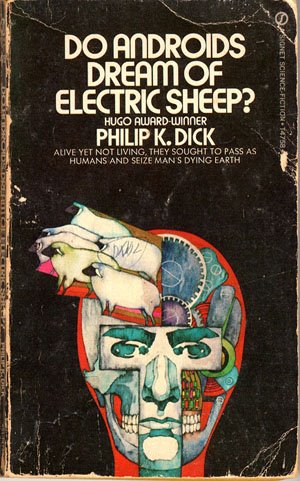 Another Stillborn Project
I was set to begin my new project: to write a screenplay based on the life of Philip K. Dick, layering ideas from his paranoid schizoid visions with his fictional writings.
My second day of research revealed the following:
http://www.philipkdick.com/media_pr-060808.html
Fuck!
Next...
Sunday, September 24, 2006
6 AM Eternal
they fly through the dark of my space
their shadows swoop down upon me
instead of sleep
I've settled on madness
their shadows swoop down upon me
instead of sleep
I've settled on madness
Apex
Intelligence, language, organization, tool use, and even the use of other animals in hunting make humans the most effective of all predators despite being slow and clumsy.
Wednesday, September 20, 2006
Solaris (1972)
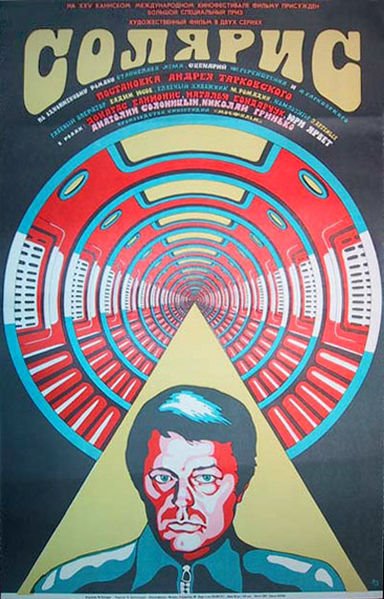
The introduction to Solaris is calm and slowly paced, with little of the drama later appearing in the film. Some people feel the car traffic sequence filmed in Japan to be too long, being placed so early on in the film that it alienates some viewers. On direct question from the Soviet censor overseeing the production, Tarkovsky said he intentionally made this sequence boring: "so that the idiots leave before the actual movie starts"
Tuesday, September 19, 2006
Why Is There Something Instead Of Nothing?
The Universe, as a whole, has a nonzero baryon number density —
that is, matter exists.
that is, matter exists.
Friday, September 15, 2006
It's Not Easy Being Green

I found this poster taped to my front window yesterday morning. My house is a commercial building. It looks like a vacant storefront but I live behind that facade. The heading reads "PUBLIC NOTICE - POSSIBLE NUCLEAR WASTE STORAGE FACILITY" It is huge, about 3 feet by 5 feet.
For a few seconds I thought my building had been condemned without my knowledge. When one reads down to the fine print one realizes that it is a poster encouraging people to vote for green policies in the by-election that was conducted yesterday in my riding. I'm troubled by this campaign strategy which I discovered to be hatched and paid for by WWF, Greenpeace, Pembina Institute, Sierra Club, Ontario Clean Air Alliance and the David Suzuki Foundation.
I'm a strong proponent of green initiatives. Over the last several elections I have encouraged many people to consider voting for the Green Party. I've convinced friends of mine who may be considered to be mainstream capitalist voters to actually vote for the Green Party. I think I have been successful largely because of the strengths of my arguments. I also feel that the message is more likely to be effective if it is coming from someone to whom the voter can relate. Aside from my predilection for black clothing I appear to fit in quite easily with the so-called mainstream. This allows me to sneak up and change the minds of accountants and lawyers who would otherwise just walk away from someone espousing green policies.
Much of the environmentalist strategy to win votes is woefully inadequate. It is often a premier example of preaching to the choir. A case in point would be the poster I found on my window. Who do they hope to sway with this tactic? Thousands of people walked or drove by before I took down the poster. Ninety-five percent of them didn't read past the headline. How many of them years later will drive by and think "wasn't there some nuclear contamination in that building?" When the building and the neighbourhood is tainted property owners become resentful.
The only people who will stop and read it and then say "yeah, that's right, I support that" will be people who already support that. Others will be angry at the scare tactics employed. Haven't we had enough of scare tactics to win votes over these last several years?
Thursday, September 14, 2006
Trench Coat Mafia
It was reported by eyewitnesses that the shooter in the Dawson College rampage in Montreal was wearing a black trench coat. Then someone found the shooter's page on vampirefreaks.com. There we have it. Everything has been neatly and roundly explained. He was a goth! That explains everything.
He was a loser, he was bullied, he was a goth, that's why he went on a shooting rampage. Surely, there must be more nuanced ways to understand aberrant behaviour. A goth is probably statistically as likely to go on a shooting rampage as anyone else in the general population. Son of Sam wore clothes from JC Penny: Does this mean that we should be suspicious of people who wear white shirts matched with sensible polyester pants?.... Well probably yes, but for other reasons.
He was a loser, he was bullied, he was a goth, that's why he went on a shooting rampage. Surely, there must be more nuanced ways to understand aberrant behaviour. A goth is probably statistically as likely to go on a shooting rampage as anyone else in the general population. Son of Sam wore clothes from JC Penny: Does this mean that we should be suspicious of people who wear white shirts matched with sensible polyester pants?.... Well probably yes, but for other reasons.
Tuesday, September 12, 2006
The Persistence of Memory
Everything in the past continues to exist.
Remembered things exist more so than not-remembered things, so you will be more real if you leave behind progeny or memes.
Dead Einstein is probably more real than living I.
Wait, does that mean that famous people are more real?
Remembered things exist more so than not-remembered things, so you will be more real if you leave behind progeny or memes.
Dead Einstein is probably more real than living I.
Wait, does that mean that famous people are more real?
Monday, September 11, 2006
Where are all the time-travellers?
Time travel will be developed in the future.
But you will only be able to travel as far back as the first running of that machine.
That's why we don't have any visitors from the future.
But you will only be able to travel as far back as the first running of that machine.
That's why we don't have any visitors from the future.
Wednesday, September 06, 2006
Bigfoot Revisited
I met a man in BC who claimed to know Bigfoot. The discussions I had with him were astonishing and will become, when I reveal their contents, the final word on Sasquatch.
I recorded my conversations with this man who claims that Bigfoot is actually his great-great uncle from Seattle. I will be reviewing the recordings over the next few weeks to try to come to grips with them. I may post some clips. Stay tuned.
I recorded my conversations with this man who claims that Bigfoot is actually his great-great uncle from Seattle. I will be reviewing the recordings over the next few weeks to try to come to grips with them. I may post some clips. Stay tuned.
Late Night Advice From a Friend
so your life is in a pickle or is pickled
the same issues preserved in brine over time
someone should eat the fucking pickle and pour the brine down the sink
the same issues preserved in brine over time
someone should eat the fucking pickle and pour the brine down the sink
Tuesday, September 05, 2006
Ministry of Plenty
I went today to the Ministry of Plenty aka Ikea Store. It was double plus good. My furniture rations were increased by ten percent so I decided to get another desk and chair for my home office. I had to return something from my previous visit so I took a number and waited with my comrades for my turn to come up. Everyone was pleased that the average wait time has been reduced for the seventh consecutive quarter. It took me only twenty-five minutes to see someone who then gave me my credits so that I could spend it upstairs.
Of course I had to wait in line for someone to print out my desk requisition. They were out of stock - something about a storeship from Eastasia having sunk on its journey across the sea. With paper in hand, I proceeded to another line where my chair requisition could be printed. I was only goodthinkful as I walked about a kilometre to the warehouse where I dutifully sought out and secured my disassembled bookshelves and then proceeded to the register lines which, I swear my brother were only about twenty deep. A mere thirty-five minutes later I was able to pay with my ration credits and proceed to the prolefeed section aka the cinnamon bun line where I was able to replenish my strength for what was yet to come. Super plus tasty!
Another half kilometre and I was positioned in the final queue. I saw only happy faces amongst my comrades and was able to avoid all thoughtcrime during the last twenty minutes before my chair arrived. I swam through the crowds to find my vehicle and was able to load and drive away without incident.
I sit on my new chair as I write this, my desk on its way from Eastasia, and my bookshelves on the floor in their boxes because they didn't include the screws needed to mount them to the wall. Still, my brother I am thankful for the Ikea Ministry of Plenty for in what other way could we ever imagine buying furniture.
Of course I had to wait in line for someone to print out my desk requisition. They were out of stock - something about a storeship from Eastasia having sunk on its journey across the sea. With paper in hand, I proceeded to another line where my chair requisition could be printed. I was only goodthinkful as I walked about a kilometre to the warehouse where I dutifully sought out and secured my disassembled bookshelves and then proceeded to the register lines which, I swear my brother were only about twenty deep. A mere thirty-five minutes later I was able to pay with my ration credits and proceed to the prolefeed section aka the cinnamon bun line where I was able to replenish my strength for what was yet to come. Super plus tasty!
Another half kilometre and I was positioned in the final queue. I saw only happy faces amongst my comrades and was able to avoid all thoughtcrime during the last twenty minutes before my chair arrived. I swam through the crowds to find my vehicle and was able to load and drive away without incident.
I sit on my new chair as I write this, my desk on its way from Eastasia, and my bookshelves on the floor in their boxes because they didn't include the screws needed to mount them to the wall. Still, my brother I am thankful for the Ikea Ministry of Plenty for in what other way could we ever imagine buying furniture.
Thursday, August 31, 2006
Notes Found in the Margins
Suicidal Art - Protest of Silence
Exhibition of World - Production of Earth
It was a sign, of course it was, it just was and that's true.
This art?
We're all recyclable.
Great Pun is Dead!
The only conspiracy is to make you beleive there's a conspiracy.
Spock/Kirk - Apollo/Dionysus
Hey, what's with the gravity?
hey-hey, ho-ho
this protest chant has got to go (repeat)
Exhibition of World - Production of Earth
It was a sign, of course it was, it just was and that's true.
This art?
We're all recyclable.
Great Pun is Dead!
The only conspiracy is to make you beleive there's a conspiracy.
Spock/Kirk - Apollo/Dionysus
Hey, what's with the gravity?
hey-hey, ho-ho
this protest chant has got to go (repeat)
Wednesday, August 30, 2006
Wednesday, August 23, 2006
Kill Bill - 5 minute review
One of my 5 minute reviews from 2003. These are reviews that I write in about 5 minutes, as soon as I get home from watching the movie.
Kill Bill is the best made, most technically skilled and most exciting action film that I have ever dis-liked. This is a film that is a step back for Tarantino as an artist. While it is true that he displays a very impressive mastery of the chosen genre it is also true that he disappoints in the paucity of any another dimension beyond style. This is a Bacchic feast of form but it lacks even a side dish of substance and what substantial content it offers is drowned out and made dysfunctional by the form.
After a brutally violent wedding murder scene, Uma Thurman's character wakes up after a lengthy coma to discover that her baby has been lost. A long and sympathetic camera lingers on her as her sorrow and rage pours out of her. The problem is that because of the onslaught that has just occurred we cannot really feel for her. Such an emotionally powerfull scene is reduced to being perceived as a drawn-out filler until more cartoonish action can be served up.
As it turns out, the actual cartoon segment in the film works really well. The Japanese style anime is very stylishly done, with excellent movement of perspective. Many of the other segments of the movie which can also be described as cartoonish also are technically successful. I understand that it is an exercise in referential filmmaking, an homage to various genres and it succeeds as a tour de force of an action martial arts film. There is however the odour of American over-acheivement. It is as if Tarantino is trying to prove that he can out-do the genre and bring it to some ultimate conclusion. The goal it seems is to make something that teenage boys can argue is the last word in a martial arts action film. It is as if we are to be awed and humbled and dared to make another film of this genre after seeing Kill Bill.
The intent itself seems unable to overcome the boyish fight fantasies it portrays. Tarantino throws down the gauntlet in some imagined competition to be crowned the uber-geek. He might win that contest and be awarded such laurels by the academy of cinema geeks but he has brought himself down a rung in the pantheon of auteur filmmakers. What has he really done that could not be achieved by countless other directors given enough time and budget to do so?
This work is not produced through the subtle insights of a talented director - and talented he surely is - the kinetic overabundance is mainly the result of having enough time and money to out-do other filmmakers. Perhaps Tarantino was stung or even ostracised by the members of that diaspora that I call the Academy of Cinema Geeks after he made Jackie Brown. Perhaps he felt that he had lost their respect and wowed to win them back. In many ways Jackie Brown is better at showcasing those more rarefied directorial talents. The ability to invent a sympathetic soul with whom the viewer can empathize is more difficult than throwing enough money at an action sequence to numb the senses. There are those who will say that my estimation of this film is really beside the point, that Tarantino intended it to be just such a movie. With this I would agree. He has indeed succeeded in his aim. My disappointment lies in the fact that he is capable of so much more and I wish he would draw again and re-aim.
Kill Bill is the best made, most technically skilled and most exciting action film that I have ever dis-liked. This is a film that is a step back for Tarantino as an artist. While it is true that he displays a very impressive mastery of the chosen genre it is also true that he disappoints in the paucity of any another dimension beyond style. This is a Bacchic feast of form but it lacks even a side dish of substance and what substantial content it offers is drowned out and made dysfunctional by the form.
After a brutally violent wedding murder scene, Uma Thurman's character wakes up after a lengthy coma to discover that her baby has been lost. A long and sympathetic camera lingers on her as her sorrow and rage pours out of her. The problem is that because of the onslaught that has just occurred we cannot really feel for her. Such an emotionally powerfull scene is reduced to being perceived as a drawn-out filler until more cartoonish action can be served up.
As it turns out, the actual cartoon segment in the film works really well. The Japanese style anime is very stylishly done, with excellent movement of perspective. Many of the other segments of the movie which can also be described as cartoonish also are technically successful. I understand that it is an exercise in referential filmmaking, an homage to various genres and it succeeds as a tour de force of an action martial arts film. There is however the odour of American over-acheivement. It is as if Tarantino is trying to prove that he can out-do the genre and bring it to some ultimate conclusion. The goal it seems is to make something that teenage boys can argue is the last word in a martial arts action film. It is as if we are to be awed and humbled and dared to make another film of this genre after seeing Kill Bill.
The intent itself seems unable to overcome the boyish fight fantasies it portrays. Tarantino throws down the gauntlet in some imagined competition to be crowned the uber-geek. He might win that contest and be awarded such laurels by the academy of cinema geeks but he has brought himself down a rung in the pantheon of auteur filmmakers. What has he really done that could not be achieved by countless other directors given enough time and budget to do so?
This work is not produced through the subtle insights of a talented director - and talented he surely is - the kinetic overabundance is mainly the result of having enough time and money to out-do other filmmakers. Perhaps Tarantino was stung or even ostracised by the members of that diaspora that I call the Academy of Cinema Geeks after he made Jackie Brown. Perhaps he felt that he had lost their respect and wowed to win them back. In many ways Jackie Brown is better at showcasing those more rarefied directorial talents. The ability to invent a sympathetic soul with whom the viewer can empathize is more difficult than throwing enough money at an action sequence to numb the senses. There are those who will say that my estimation of this film is really beside the point, that Tarantino intended it to be just such a movie. With this I would agree. He has indeed succeeded in his aim. My disappointment lies in the fact that he is capable of so much more and I wish he would draw again and re-aim.
Tuesday, August 22, 2006
Girls On A Beach... dude

While reading at the beach on Comox Lake, two young girls stepped out of a small jeep vehicle and set up their tanning towels in front of me. This is the conversation that was overheard:
Girl1: Oh Dude, I've had like the best summer ever.
Girl2: I know. It's been like so awesome.
Girl1: Dude, yeah just me and you, its been so Gong Show.
Girl2: Yeah, like sooo Gong Show.
Girl1: Just doing random shit.
Sunday, August 20, 2006
Jakes On A Plane
I just landed in Northern BC for a couple of weeks.
I plan on continuing my research into the Bigfoot legend. Next week I have an interview lined up with someone who not only claims to have personaly known the famous Sasquatch but also claims to be related to him.
My results will follow soon.
I plan on continuing my research into the Bigfoot legend. Next week I have an interview lined up with someone who not only claims to have personaly known the famous Sasquatch but also claims to be related to him.
My results will follow soon.
Thursday, August 17, 2006
Crazy Cat Lady
Everyone has heard of those crazy cat ladies. They are those eccentric women who live in unkempt houses with their dozens of cats who can be seen eating and pooping all over the place. Well it turns out that she may have been made crazy by the poop.
Toxoplasma gondii is a parasite that lives in cat feces and can be transmitted to humans who come into contact with it. It can cause Toxoplasmosis that can make one ill or in rare cases be fatal. It is thought that about half of the world's population may be latently carrying it. What is interesting is that some studies seem to indicate that even when latent the parasite may have effects on human behaviour.
Could it be that the world is becoming ever more insane not because of any large social or economic developments but because of our affection for our feline friends?
Toxoplasmosis
Toxoplasma gondii is a parasite that lives in cat feces and can be transmitted to humans who come into contact with it. It can cause Toxoplasmosis that can make one ill or in rare cases be fatal. It is thought that about half of the world's population may be latently carrying it. What is interesting is that some studies seem to indicate that even when latent the parasite may have effects on human behaviour.
Could it be that the world is becoming ever more insane not because of any large social or economic developments but because of our affection for our feline friends?
Toxoplasmosis
Wednesday, August 16, 2006
Cuba Libre (Cuban Rum + Coca Cola + Lime)
Ever since Fidel was said to have passed on the leadership to Raul I have had the suspicion that he may have actually died. I don't find the photos very convincing. Regardless, the effect has been a greater affection for Fidel from the people.
But then again, I always thought that Coca Cola planned the New Coke fiasco to redouble the loyalty of Coke drinkers.
Meanwhile about 90 miles from the Florida Keys (where key lime is grown) Sheritt International is pumping about 20,000 barrells of crude oil.
The corporations have been licking their lips, waiting for a sip of a Cuba Libre, but they may go unquenched if the Cubans are able to pull off a smooth transition when Fidel passes on.
But then again, I always thought that Coca Cola planned the New Coke fiasco to redouble the loyalty of Coke drinkers.
Meanwhile about 90 miles from the Florida Keys (where key lime is grown) Sheritt International is pumping about 20,000 barrells of crude oil.
The corporations have been licking their lips, waiting for a sip of a Cuba Libre, but they may go unquenched if the Cubans are able to pull off a smooth transition when Fidel passes on.
Tuesday, August 15, 2006
Random Musings
Bigfoot is a big-footed creature.
Bunker Palace
Kinder Fassbinder
Undemanding Slaveowner
Eat This Book
Out-Neil Neil
Abortion Distortion
Duotang
Monkey Scary
Where did the future go?
Tickle Me Emo
Spotted Leper
Mercury Headgear
Heidegga Ma Nigga
Bunker Palace
Kinder Fassbinder
Undemanding Slaveowner
Eat This Book
Out-Neil Neil
Abortion Distortion
Duotang
Monkey Scary
Where did the future go?
Tickle Me Emo
Spotted Leper
Mercury Headgear
Heidegga Ma Nigga
Monday, August 07, 2006
Wikimania
Last night I innocently read the featured article on Wikipedia:
I noticed that there was a dispute about the content so I clicked on the discussions and found myself again only several hours later.
Holy cow! I don't know what to think. I was impressed by the determination of the several contributors who seemed to have been carrying out a heated debate. It really brought home the amount of effort that goes into this open source project to build a comprehensive free encyclopedia. I'm thankful that so many people feel the spirit of voluntarism. I read about a guy last week who had contributed thousands of articles. This on top of his regular day job.
Traditional encyclopedias were written by people who we assumed were experts on the entries that they produced. We didn't really know who these contributors were but we knew that if their words were printed in the book then it must have had the authority of truth. Wikipedia allows you and I to write the entries and others to change them. There is still some notion of authority since we assume those contributing must know a great deal about the subject but the traditional power of the authority of knowledge is out the window. You are allowed to scrutinize the information, make suggestions, and ultimately rewrite the entry altogether.
Ideally, one would think that this process would bring us ever closer and closer to the truth. I will suggest that this is correct but not in the way one might suppose. The ideal of truth is an old Platonic notion that envisions truth as the ultimate reality that we only catch glimpses of in our progression towards it. If you subscribed to this approach then as long as all the contributors acted honestly then we would get closer and closer to the ideal of the truth of the matter. But I don't buy this approach to truth.
Truth can also be seen to be something less stable than a perfect ideal. It can be thought of as something that is more pliable, morphous, and temporal. It can change, be willed to change, and change over time. Truth can also be thought of as a social construct. Some things are true by consensus. If a group of people in a certain area of the world consider themselves to be of a certain ethnic variety then that is true for them by their social act of collectively saying that it is true. The notion of race is one of those ideas that are much more slippery, morphous and temporal than one would assume. I think if we think deeply about it, the idea of race seems to slip away perhaps entirely.
If you find yourself reading any Wikipedia entry at any time I would argue that you are always reading the truth... as it has been agreed upon by the consensus of those who can contribute to it. Since we can all contribute to it, that entry may be the closest thing we have to truth. It is a wonderful mix of authority and consensus.
I noticed that there was a dispute about the content so I clicked on the discussions and found myself again only several hours later.
Holy cow! I don't know what to think. I was impressed by the determination of the several contributors who seemed to have been carrying out a heated debate. It really brought home the amount of effort that goes into this open source project to build a comprehensive free encyclopedia. I'm thankful that so many people feel the spirit of voluntarism. I read about a guy last week who had contributed thousands of articles. This on top of his regular day job.
Traditional encyclopedias were written by people who we assumed were experts on the entries that they produced. We didn't really know who these contributors were but we knew that if their words were printed in the book then it must have had the authority of truth. Wikipedia allows you and I to write the entries and others to change them. There is still some notion of authority since we assume those contributing must know a great deal about the subject but the traditional power of the authority of knowledge is out the window. You are allowed to scrutinize the information, make suggestions, and ultimately rewrite the entry altogether.
Ideally, one would think that this process would bring us ever closer and closer to the truth. I will suggest that this is correct but not in the way one might suppose. The ideal of truth is an old Platonic notion that envisions truth as the ultimate reality that we only catch glimpses of in our progression towards it. If you subscribed to this approach then as long as all the contributors acted honestly then we would get closer and closer to the ideal of the truth of the matter. But I don't buy this approach to truth.
Truth can also be seen to be something less stable than a perfect ideal. It can be thought of as something that is more pliable, morphous, and temporal. It can change, be willed to change, and change over time. Truth can also be thought of as a social construct. Some things are true by consensus. If a group of people in a certain area of the world consider themselves to be of a certain ethnic variety then that is true for them by their social act of collectively saying that it is true. The notion of race is one of those ideas that are much more slippery, morphous and temporal than one would assume. I think if we think deeply about it, the idea of race seems to slip away perhaps entirely.
If you find yourself reading any Wikipedia entry at any time I would argue that you are always reading the truth... as it has been agreed upon by the consensus of those who can contribute to it. Since we can all contribute to it, that entry may be the closest thing we have to truth. It is a wonderful mix of authority and consensus.
Sunday, August 06, 2006
Tuesday, August 01, 2006
The Wisdom of Silenus
What occurred to me at the funeral of a young man who was to be married in two weeks:
Oh, wretched ephemeral race, children of chance and misery, why do you compel me to tell you what it would be most expedient for you not to hear? What is best of all is utterly beyond your reach: not to be born, not to be, to be nothing. But the second best for you is -- to die soon. (BT:3 [Sophocles, Oedipus at Colonus, 1224ff])
Now it became possible to stand the wisdom of Silenus on its head and proclaim that it was the worst evil for man to die soon, and second worst for him to die at all. (Birth of Tragedy vi-xv, Nietzsche's 1887 preface)
Oh, wretched ephemeral race, children of chance and misery, why do you compel me to tell you what it would be most expedient for you not to hear? What is best of all is utterly beyond your reach: not to be born, not to be, to be nothing. But the second best for you is -- to die soon. (BT:3 [Sophocles, Oedipus at Colonus, 1224ff])
Now it became possible to stand the wisdom of Silenus on its head and proclaim that it was the worst evil for man to die soon, and second worst for him to die at all. (Birth of Tragedy vi-xv, Nietzsche's 1887 preface)
Monday, July 31, 2006
Wednesday, July 19, 2006
Positive Thinking
I had a basketball coach in high school who was always trying new and experimental things to improve our play. Some were terrible failures. He decided that french fries were the perfect food for us and encouraged us to feast on them before games. He decided that if we all wore the same shoes we would all coalesce into a single-minded machine. These didn't work. We continued to lose as we sluggishly tripped over our identical 20 year-old Converse shoes that were all the rage when he used to play.
One day he told us that he had just read about some recent research and was ready to put it into action. He made us line up at the foul line, close our eyes and imagine shooting perfect foul shots... over and over again. The boys naturally began to giggle, crack jokes and erupt in fits of laughter to which the response was to force us to do hours of wind sprints.
That was my first experience with positive thinking as a strategy for success. He was probably right - a little visualization could positively develop your follow-through. I have since come across other people who seem to take this idea a little too far. Sure, you could visualize yourself in healthy positive situations and you might be able to more easily achieve some of these end results. But does this mean that if I visualize myself winning the lottery, I will have a better chance of winning the lottery? If I visualize Trezeguet scoring on a penalty shot does that mean he will be more likely to score? (apparently not)
It seems to me that positive visualization will only work if you had the power to affect the outcome in the first place. I have the power to improve my free-throw so visualization could work. I have no control over the balls inside a lottery bubble so I could visualize all I want and no different result will come of it.
Some people not only subscribe to this irrational over-exuberance but also to it's converse. I had a business partner who always insisted on thinking about what could go right but he never wanted to hear about what could go wrong. He assumed that even thinking about the negative would bring it about. This is particularly dangerous and doomed to failure. It is in our arsenal of useful evolutionary traits to worry about what could go wrong. Not taken to excess, this is what allows us to avoid terrible outcomes simply by visualizing their possibilities. To ignore those and to only focus on what could go right is just asking to be sucker-punched.
Remember to visualize positively about those things upon which you could have some effect and not on things that you could not possibly have any effect. Also remember to carry an umbrella if you don't want to get wet and if you think it might rain. Bringing the umbrella will not make it rain.
One day he told us that he had just read about some recent research and was ready to put it into action. He made us line up at the foul line, close our eyes and imagine shooting perfect foul shots... over and over again. The boys naturally began to giggle, crack jokes and erupt in fits of laughter to which the response was to force us to do hours of wind sprints.
That was my first experience with positive thinking as a strategy for success. He was probably right - a little visualization could positively develop your follow-through. I have since come across other people who seem to take this idea a little too far. Sure, you could visualize yourself in healthy positive situations and you might be able to more easily achieve some of these end results. But does this mean that if I visualize myself winning the lottery, I will have a better chance of winning the lottery? If I visualize Trezeguet scoring on a penalty shot does that mean he will be more likely to score? (apparently not)
It seems to me that positive visualization will only work if you had the power to affect the outcome in the first place. I have the power to improve my free-throw so visualization could work. I have no control over the balls inside a lottery bubble so I could visualize all I want and no different result will come of it.
Some people not only subscribe to this irrational over-exuberance but also to it's converse. I had a business partner who always insisted on thinking about what could go right but he never wanted to hear about what could go wrong. He assumed that even thinking about the negative would bring it about. This is particularly dangerous and doomed to failure. It is in our arsenal of useful evolutionary traits to worry about what could go wrong. Not taken to excess, this is what allows us to avoid terrible outcomes simply by visualizing their possibilities. To ignore those and to only focus on what could go right is just asking to be sucker-punched.
Remember to visualize positively about those things upon which you could have some effect and not on things that you could not possibly have any effect. Also remember to carry an umbrella if you don't want to get wet and if you think it might rain. Bringing the umbrella will not make it rain.
Tuesday, July 18, 2006
Monday, July 17, 2006
Rebel Hair
It seems teenage boys will groom themselves in a fashion that they perceive is most likely to scare their parents. This might be why suburban white kids tend to look like inner city black kids. So why do so many young men seem to be growing beards these days? Is it part of this hick-chic movement or is it because with their bushy beards they look like they could be members of Al-Qaida?
Monday, July 03, 2006
Moire Patterns

These Five Video Stills (1990's) are some of the most accessible works created by Sternime after his resurfacing from the dark decade of the eighties. After creating such foreboding works as the Blackened Life series and photo essays like Grey Matter (1988), he turned to a more colorful approach and wholeheartedly began his study of popular culture, in particular the world of Advertising and Television. The perfect fusion of the heightened elements of these worlds is manifested in the Infomercial and an exploration of this is presented in I'll Cut Off Their Heads and Charge it To The Corporation (1990's)
When studied closely many of his photos appear to have moire patterns - the visual interference patterns that can appear if one takes a photo of a video image. They also frequently reveal pixelations. Occasionally he would glean a few images from hours of random television video recordings and then photograph them at precisely the chosen moment without pausing the image. But many of Sternime's photos were actually photos of a video screen displaying scenes that he had previously shot on traditional film. Having gone through these several transformations they begin to reveal some imperfections. These interference patterns are a welcome and intentional aspect of the final image presented by Sternime.
The scientific explanations for these patterns are clues to the role these interference patterns play in Sternime's study of popular TV culture. If one stands close to a television while it is displaying an image, one notices that the seemingly smooth contiguous images are in fact composed of a series of grid alternations of a few primary colours. The screen constantly refreshes itself several times per second. It does not do this all at once, but by alternating every other line across the screen, then it refreshes the missing lines right before beginning again. The human mind simply fills in the missing lines like it fills in the missing movements in a projected reel of film. The photo image sometimes catches it in the process of refreshing so that every alternating line is out of phase. Every alternating line is actually from the previous refresh wave right beside a line from the next refresh wave. The moire pattern is an interference of these lines.
What seemed poignant to Sternime was that "the interference results from the interaction of the past wave with the future wave and what we are left with is the present image - a clearly imperfect record of the marriage of what has already occurred to what has yet to happen."
This deconstructive view of a video image is richly filled with evocative symbolism. By bringing this process to light Sternime is playing with the notions of temporality, reality, appearance and memory. In its most basic definition, all art is merely some form of reflection. The manifestation of this reflection is also recorded in some physical form. It can be said that reality or truth is reflected in a work of art such that the truth of a peasant's life is in some respect reflected and recorded in Van Gogh's painting of a pair of torn and tattered slippers that have been flung upon the floor.
But what could be said to be reflected in a work of art that records examples of advertising? Sternime's answer is rich and layered. The first thing to consider is that Sternime's definition of art would be much more inclusive than one might find in any academic theory. For him, art can be present in just about any reflected medium. The ever-present media of Television can be home to art. This is not surprising. What is surprising is that the advertising commercials sandwiched within the shows can also be home to art.
Sternime makes no effort to present examples of art in advertising. What is revelatory for the viewer of Sternime's work is that by studying the processes of advertising one reveals a deeper understanding of the nature of art. For Sternime, Art and Advertising are both activities that seek to exploit a particular medium or media to invoke a powerful effect upon the viewer.
Nietzschean aesthetics speaks of forces of artistic nature that align themselves in an opposing duality. There is the orgiastic random passion of the Dionysian opposed to the organizing structured regularity of the Apollonian. A similar duality is explored in Sternime's own meditations on Art. He touches on the opposition of the individual with the collective and the varying perception and understanding of the same world when viewed at the micro or macro levels.
The question asked by Sternime is "what can we come to know of the whole by studying the parts, and what do we come to know about the part by studying its whole?" The locus of the experience of art begins with the reflected image, but the image exists as both an interesting physical process of perception and a more interesting mental process of appreciation. The experience of art begins with something that is perceived and something that is appreciated through that perception. In these Five Video Stills Sternime reminds us of the reflective nature of the perception.
... - to be continued.
Sunday, June 18, 2006
Out of Touch
Jake to Universe
I've been in the northern parts of the Islands in B.C. this past week. I'm a million miles from home. No Globe and Mail, no TV, no computer, no problem. I don't seem to miss those things even though they seem indispensible in my life back in Toronto.
I've started reading Love in the Time of Cholera by Marquez. I'm impressed with the first 70 pages. I wonder what it's like in Spanish? Literature should be read in the original language whenever possible but better to read it than not at all.
I've been in the northern parts of the Islands in B.C. this past week. I'm a million miles from home. No Globe and Mail, no TV, no computer, no problem. I don't seem to miss those things even though they seem indispensible in my life back in Toronto.
I've started reading Love in the Time of Cholera by Marquez. I'm impressed with the first 70 pages. I wonder what it's like in Spanish? Literature should be read in the original language whenever possible but better to read it than not at all.
Saturday, June 10, 2006
God versus Santa
Some religions seem to want to make God the Santa Claus for adults.
Checking lists, rewarding those who behave and an eternity of coal blackness for those who don't.
Checking lists, rewarding those who behave and an eternity of coal blackness for those who don't.


Thursday, June 08, 2006
Universal Standard


In this peice entitled Universal Standard (1990's) Sternime plays with the stereotypes of what he called "the average nuclear family complete with all the toxic sludge one would expect".
Sternime had little opportunity to experience a childhood that could remotely be considered normal except for the brief span of a few months when his Mother Gloria moved in with a policeman and his daughter. This rigid and authoritarian man "was obsessed with all the outward appearances of normalcy, set up mainly as a subterfuge for his true psychopathic nature".
Later his mother would admit to him that this episode was her attempt to sacrifice her happiness so that little Sternime could "have a normal family setting within which he could hopefully become more normal". It turned out to be a horrible experience for both he and his Mother until the policeman died under suspicious circumstances while allegedly cleaning his gun.
Monster Devour
From the Monster Series (1990's) another example where the filmic and the photographic were combined to create a gallery piece of strong kinetic intensity. In these works Sternime explores his almost pathological unease with sexuality. He claimed that the feelings associated with sex would nearly overcome him. He likened those emotions to "having feelings of motherly love and comfort suddenly torn asunder when your mother turns and decides to devour you whole". Sexuality for Sternime was a nexus of comfort, coersion, and cannabilism.
He admits to having watched several horror B-movies with his mother as a young child. Sternime's mother Gloria was an independant minded single mother who never married and had a series of men revolve through their lives. Little Sternime would often find himself at the drive-in movies with his Mother and her date. After being lovingly tucked in to sleep he would recall often waking during his sleep to the shrilling screems of the movie. He wasn't sure at the time whether he was dreaming but would be startled to find that in addition to seeing and hearing someone being hacked and slashed to death on screen he would peek open his eyes to see what appeared to be his mother "savagely and with hungry desire cannabalizing this poor man who was lying on his back and writhing in pain".
The stylized representation of the act of fellatio plays prominently in many of his films and display pieces. He considered it to be "at once the most giving and most debilitating act that one can perform on a lover. It is an association between two people that requires the greatest of intimacy because it prioritizes the the need for trust over and above the fear of being castrated". The fear of cannabilistic castration seems to have won out for Sternime since the fellators represented in his works tend more often to be depicted as monstrous.
Friday, June 02, 2006
Grey Matter

Although Sternime is best known for his films, he is regarded by many to be a photographer first. His cinematic shots were painstakingly researched and planned. Sternime insisted that each of his scenes could be frozen and be taken for photographs in their own right. While planning his shots for a film he would spend months taking photos and developing his visual ideas so that they could stand alone and be appreciated. These recently discovered stills taken by Sternime in the eighties reveal a darker tonality of subject matter. They were undoubtably taken with some cinematic idea in mind. Sadly, these were never developed into any film he made. So they stand soley as a photographic representation of a cinematic project that never occurred. Struggling through his depression and solitude he continued quietly to work through his personal troubles by externalizing what he called his "overbearing dark nothingness within the geography of my mind".
This series of photographs is titled Grey Matter (1988). They were titled and sub-titled by Sternime but were not numbered as they appear here. They were meant to coexist in a group but not within any order. As the name would suggest, they are meant to somehow externalize the psychic dread into the physical world. He invites the viewer to enter his mental blackened psychological realm. Sternime often struggles with the intertwining connections between the physcial and the psychical in his works. Fully aware of his embodied physical existence, Sternime commented "at this one level I know I am comprised of physical elements that determine 'how' I am. Yet I am also certain that 'how I am’ psychically determine my physical existence." Grey Matter is an apt title, referring to the physicality of the "stuff" or "matter" of the brain while also referring to the more abstract "greyness" of his emotional being, "the matter of greyness in my life"
Photo 4 (Amongst Tendrils). A powerful evocation of forlornness, it presents a young man visually overpowered by the complexity of a forest of "tendrils". He is lost within and overwhelmed by the barren dusky greyness of the steep forest of the visually interconnected branches.
Photo 1 (Innocent Beauty) reflects his early childhood memories growing up in an industrial town. Sternime had never been able to shake the effect of the industrial landscape on his imagination "beautiful and horrid in the same billowing plume". Industrial architecture conveyed to Sternime "a solidity of purpose, an economy of design that purely follows function without any need for artifice" The magnificent smokestacks seem to spew toxic smoke to some but soft puffy clouds to the mesmerized child. The innocent seagulls fly about in the foreground of the factory. The moniker of innocent beauty is perhaps more attributed to the factory than the birds. The factory is built with no regard for beauty yet to Sternime it is unconciously or innocently beautiful. The forlornness shown in # 4 is counterposed to the iconic representation of homecoming.
In photo 2 (Dwelling) an estate is enshrouded in a misty haze. It is an ideal home setting of a beautifully landscaped property. Despite such perfection, it is abundantly clear that little life is revealed in the shot. The imagery is more funereal than domestic. One’s lifelong homesickness can only be satisfied with the ultimate blackness of death. So it is here we see Sternime working out what was to become one of his cinematic motifs: that a constant estrangement with the everyday cannot ultimately result in any satisfaction.
In photo 5 (Grounded), a seagull is shown at the foot of the photographer. After a life of flight - a life of ethereal imagination - we are reminded that we will be grounded by the physicality of the everyday world. "After dancing with the stars, we fall back to the ground which is our dwelling".
Photo 3 (Corridors) once again returns to the internal tendrils of the imaginative experience. Black and white photography became much favoured by Sternime during the eighties. "Two colors in opposition, yet together they produce infinite shading." This perfectly symbolized the central opposition in human imagination for Sternime. Human experience is at once capable of the highest highs and the lowest lows. The checkerboard pattern of the floor as well as the alternating pillars revealing light and casting shadow are clues to Sternime’s revelation of this infinite opposition. Yet in the corridor of black and white there grows an organic branching of tendrils again defying the sterility and thriving in spite of the shade.
Subscribe to:
Posts (Atom)